




















• About
  • Privacy & Policy
Cleverall AI, Provides tutorials and resources for educators to harness AI in teaching and learning.
  • Home
  • Tutorials
    Man in a suit relaxes at his desk, smiling at a computer screen displaying a virtual assistant and email icons.

    How to Use AI for Email Management: Reclaim 5 Hours of Your Week with Smart Automation

    Diagram illustrating a 6-step guide for educators using ChatGPT for student assessment: setting objectives, choosing questions, analyzing results, providing feedback, adjusting instruction, and ethical practice.

    ChatGPT for Student Assessment: A Step-by-Step Guide for Educators

    A woman in business attire observes a humanoid robot sorting through a stack of papers in an office setting.

    How Can AI Be Used for Grading Student Papers: A Comprehensive Guide to Automated Assessment

    A robotic arm places books on a conveyor belt in a modern, well-lit room.

    How to Automate Classroom Tasks with AI Tools: A Practical Guide for Teachers

    Person typing on a laptop at a black table with a cup of coffee, a notebook, and a pen, in front of bookshelves.

    Using Grammarly to Improve Student Writing: Enhancing Academic Performance

    Vintage Schaub-Lorenz radio with a red and silver design, featuring buttons and a transparent cover, set in a worn room with peeling paint.

    How to Use AI in Music Education: Exploring Suno, ChatGPT for Lyrics, and More

  • Integration
    A group of people sitting around a table, engaging in a meeting. Laptops and documents are on the table, and a screen displays information in the background.

    The Future of Curriculum Planning: AI-Assisted Content Creation – Transforming Education Through Smart Technology

    An illustration of a brain with "AI" in the center, surrounded by icons of gears, a light bulb, and a microchip, with circuit lines in the background.

    How Can AI Be Used for Critical Thinking: Tools and Strategies for Enhanced Decision Making

    A person is giving a presentation to a group of students in a classroom. Two digital screens display graphics in the background. Students are seated at a table with laptops.

    How to Use AI Responsibly in the Classroom: Best Practices for Educators

    Students sit at desks using tablets in a classroom while a teacher stands near a whiteboard in the background.

    AI Tools for Education: Revolutionizing Teaching and Learning Practices

    A person presents a robotic design on a screen to an audience in a classroom setting. Attendees sit at desks with laptops and tablets.

    AI in Education 2025: The Role of AI Tools in Modern Schools

  • Basics
    A small, smiling robot with antennae sits on a wooden desk near books and a tablet, with green plants in the background.

    Best Tool ChatGPT, Claude, or Gemini for Education: A Comprehensive Comparison for Educators in 2025

    Person sitting at a desk using a computer, smiling, in a sunlit room with posters on the wall and a potted plant nearby.

    The Basics of Using ChatGPT: A Beginner’s Guide to AI Communication

    An abstract image depicting a microchip at the center; left side with glowing nodes and fibers, right side with circuit lines and blue dots.

    What Is One Challenge in Ensuring Fairness in Generative AI: Addressing Dataset Bias and Representation

    Students sitting at desks taking notes, while a teacher stands beside a large screen displaying a robot. Classroom setting with a focus on technology.

    AI in Education Basics: A Practical Guide for Modern Classrooms

    Students on computers learning possibly using AI

    AI in Education Pros and Cons: Evaluating the Impact of Technology on Learning

    A robot and a teacher interact in a classroom, with students observing. A futuristic digital display is projected onto a screen in the background.

    Top 5 Myths About AI in Education Debunked

    A man in a suit presents to a group of people seated with laptops in a classroom. A digital display with graphs and icons is projected on the wall. Sunlight streams through large windows.

    How Can AI-Powered Educational Tools Help Teachers Save Time on Administrative Tasks?

  • Educators
    A teacher and student smile while looking at a tablet displaying an AI rubric generator in a classroom setting, with other students engaged in learning activities in the background.

    Free AI Rubric Generator: Best Practices for Creating Custom Rubrics That Transform Learning

    In a sunlit classroom, a student studies a holographic display where mathematical equations intertwine with artificial intelligence concepts. This scene exemplifies personalized math learning with AI, as sunlight streams through the window, illuminating the innovative approach.

    AI Tools for Math Teachers

    A classroom scene with a diverse group of attentive students sitting at desks. A teacher stands in front of a blackboard, gesturing with arms open. A red flag hangs on the wall.

    AI-Powered Classroom Management Intervention: Harnessing Artificial Intelligence for Improving Student Behavior

    Students seated at desks using computers in a classroom, with three people standing in front of the room.

    AI Integration in Education: Transforming Learning Environments

  • Students
    In a futuristic setting, a person interacts with a holographic interface showcasing a humanoid robot, data charts, and a digital identification screen—illustrating the seamless convergence of AI and future careers.

    AI and Future Careers: Preparing for the Evolving Job Market of Tomorrow

    A humanoid robot with a digital face interacts with a seated person in a room with shelves and books.

    The New Tutor: Google AI Studio Revolutionizes Personalized Learning in 2025

    A boy sits at a desk, using a tablet. Various digital graphs and charts are projected around him. Books and stationery are on the desk, and a plant is in the background.

    AI for Students with ADHD: Transforming Learning Through Digital Support Tools

    Office space with a sign reading "What is NotebookLM" above plants and desks, with sticky notes on a distant whiteboard.

    Introducing NotebookLM: The Best AI Notebook Tool for Students in 2025

  • Resources
    A person in a denim jacket works at a desk, writing in a notebook and looking at a computer screen.

    Perplexity AI for Education

    A teacher stands at the front of a classroom, gesturing while students sit at desks with laptops, focused on a presentation displayed on a screen.

    Tools for Generative Artificial Intelligence in Education in 2025

    A digital artwork depicts a humanoid figure with a glowing brain and intricate circuitry, reflecting the essence of artificial intelligence. Connected nodes illustrate the seamless connectivity akin to cutting-edge Google AI Tools.

    Google AI Tools for Educators: Transforming Teaching with Generative AI

    A paper bag with a logo and "Chatgpt" sits on a wooden table in a classroom.

    Top Features of ChatGPT Every Educator Should Know: Enhancing Teaching and Learning

No Result
View All Result
Cleverall AI
No Result
View All Result

What Is One Challenge in Ensuring Fairness in Generative AI: Addressing Dataset Bias and Representation

February 21, 2025
Home Basics
Share on FacebookShare on Twitter

What Is One Challenge in Ensuring Fairness in Generative AI: Addressing Dataset Bias and Representation

Generative AI systems shape our digital world in countless ways, from creating text to generating images. These powerful tools bring amazing capabilities, but they also raise important concerns about fairness and equal treatment.

A diverse group of objects entering a funnel, each taking a unique path before emerging equally

A major challenge in ensuring fairness in generative AI models is addressing bias. is the lack of agreement on what fairness means across different cultures, industries, and situations. This makes it hard to create universal standards that work for everyone.

Training data and inherent biases Bias in model training can lead AI systems to produce unfair or discriminatory outputs. When AI models learn from biased historical data, they risk repeating and amplifying existing social inequalities.

Key Takeaways

  • Different cultural perspectives and contexts make defining fairness in AI systems complex
  • Biased training data creates unfair outcomes that can harm specific groups
  • Regular monitoring and testing helps catch and fix fairness issues in AI systems

Understanding Fairness and Bias in Generative AI

Generative AI systems face significant challenges with bias and fairness in their outputs. These AI models learn patterns from training data, which often contains existing societal biases and prejudices.

Biased generative AI can produce harmful outputs This can lead to AI technologies that unfairly discriminate against certain groups. This can happen through gender stereotypes, racial prejudice, or cultural misrepresentation in generated content.

Data drift poses a major fairness challenge. Training data becomes outdated over time, leading to AI systems that don’t reflect current social values and norms.

Key Sources of AI Bias:

  • Biased training data
  • Flawed algorithms
  • Limited diversity in development teams
  • Incomplete testing methods

Critical Fairness Metrics:

  • Equal treatment across groups
  • Consistent accuracy rates
  • Balanced representation
  • Proportional outcomes are essential for ethical considerations in AI solutions.

Bias auditing and human oversight help identify and reduce unfair treatment in AI systems. Regular testing and updates are needed to maintain fairness standards in AI technologies.

AI developers must actively work to prevent algorithmic discrimination. This includes using diverse training data and implementing fairness checks throughout the development process.

Challenges in Training Data and Representation

A diverse group of objects being fed into a machine, but only a limited range of outputs are being produced, representing the challenge of ensuring fairness in generative AI

Training data quality and diversity directly impact how fairly AI systems treat different groups. Biased or unrepresentative data leads to discriminatory outputs that can harm marginalized communities.

Ensuring Representative Datasets

Training data bias remains a critical issue in large language models. Many datasets overrepresent certain demographics while underrepresenting others.

Data augmentation techniques help expand limited representation. AI teams can create synthetic data to fill gaps for underrepresented groups.

Regular data audits identify gaps in representation across:

  • Gender
  • Race and ethnicity
  • Age groups
  • Geographic regions
  • Socioeconomic backgrounds should be considered in AI model training to ensure fairness.

Mitigating Bias in Training Data

Continuous monitoring and bias auditing These practices help catch problematic patterns early in the development of AI applications. Teams must actively screen for harmful stereotypes and discriminatory associations.

Key mitigation strategies include:

  • Removing biased examples
  • Adding counter-examples
  • Balancing demographic representation
  • Testing for unfair correlations

Model architecture choices can amplify or reduce inherited bias. AI systems need robust safeguards against generating harmful stereotypes or hallucinations about underrepresented groups.

Teams should document their bias mitigation efforts and measure improvements in representation over time.

The Role of Transparency and Explainability

Transparency and explainability are key requirements for building fair and trustworthy AI systems. These elements help users understand how AI makes decisions and identify potential biases.

Integrating Explainable AI (XAI) Practices

XAI tools help break down complex AI decisions into understandable components. Teams must design AI systems that can explain their outputs in plain language.

Clear AI governance policies need to be built into the development process from the start. This includes documenting decision-making processes and data sources.

The key elements of XAI include:

  • Model interpretability features
  • Visual explanations of AI decisions
  • Plain language descriptions of system behavior
  • Documentation of training data sources

Continuous Monitoring and Human Oversight

Regular monitoring helps catch and fix fairness issues before they impact users. Teams should track key metrics and review system outputs.

Human experts must review AI decisions regularly to verify fairness in AI applications. This includes checking for:

  • Unexpected biases in outputs
  • Changes in model behavior
  • Data quality issues
  • Alignment with ethical guidelines

Teams need clear processes to document and address problems when found. Quick intervention prevents unfair outcomes from affecting users.

Evaluating and Ensuring Equitable AI Systems

A diverse group of objects entering a funnel, with some objects being blocked while others pass through, representing the challenge of ensuring fairness in generative AI

Regular testing and monitoring of AI systems helps identify unfair patterns and biases. AI developers must implement specific techniques and follow clear standards to build fair and trustworthy systems.

Adversarial Debiasing Techniques

Bias in AI systems requires active detection and correction through specialized methods. Teams use adversarial debiasing to identify and remove unwanted patterns that could lead to unfair outcomes.

Key debiasing approaches include:

  • Pre-processing techniques to clean training data
  • In-processing methods that modify algorithms during training
  • Post-processing steps to adjust model outputs

Human-in-the-loop systems provide crucial oversight. Expert reviewers catch biases that automated systems miss and help validate fair outcomes.

Developing Ethical AI Development Standards

Organizations need clear ethical frameworks for AI development. Standards should cover:

Core Requirements for ethical AI include fairness and unbiased model training.

  • Regular fairness audits and testing of AI technologies are crucial for maintaining ethical standards.
  • Diverse representation in training data
  • Documentation of model limitations
  • Transparent decision-making processes

Development teams must track their systems’ impacts on different user groups. This monitoring helps catch potential discrimination early.

Regular updates to ethical guidelines ensure standards stay current with new AI capabilities and emerging fairness concerns.

Applications and Implications of Fair and Biased Generative AI

A diverse group of objects being input into a generative AI system, with some objects being favored over others

Fairness in AI directly impacts real-world outcomes across creative and medical applications. Biased AI systems can perpetuate discrimination, while fair AI enables more equitable and accurate results.

Content Generation and Creativity

Generative AI bias affects creative outputs in significant ways. AI art and writing tools may favor certain cultural perspectives or aesthetic styles based on training data limitations.

Text generation systems often show bias in character portrayals, storylines, and language use. These biases can reinforce stereotypes in marketing content, news articles, and creative writing.

Image generation tools may produce distorted representations of different demographics. For example, AI art generators might create fewer images of women in leadership roles or show limited diversity in facial features and skin tones.

Facial Recognition and Healthcare Diagnostics

Bias in healthcare AI systems often arises from insufficient inclusivity in data. can lead to serious consequences in patient care. Facial recognition algorithms often show lower accuracy rates for certain ethnic groups and genders.

Medical imaging AI may miss important diagnostic markers in underrepresented populations. This happens when training data lacks sufficient diversity in patient demographics and medical conditions, affecting the fairness of AI solutions.

Healthcare screening tools require careful bias testing and monitoring. Regular audits help identify potential discrimination in:

  • Disease detection rates
  • Treatment recommendations
  • Risk assessments
  • Patient prioritization

Frequently Asked Questions
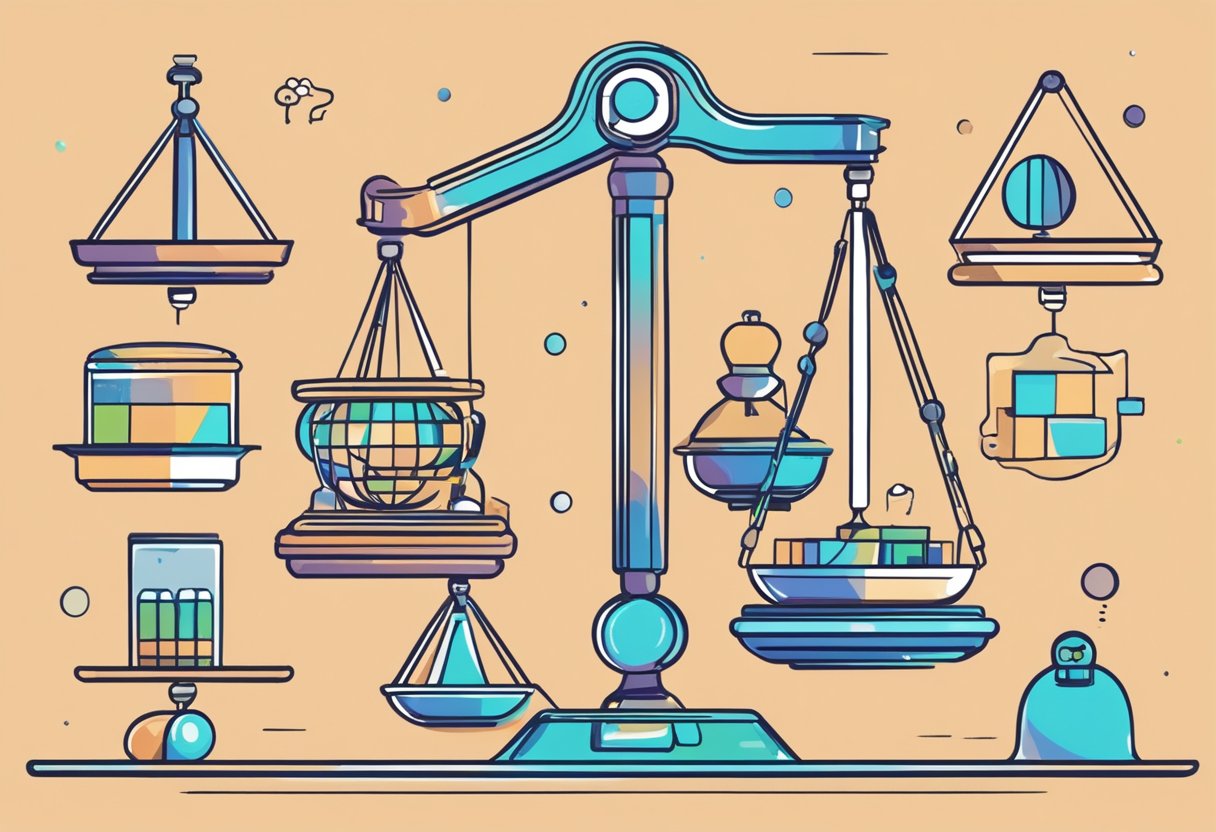
A scale balancing various objects, each representing different aspects of fairness and bias in generative AI

Key challenges in generative AI fairness include dataset biases, algorithmic transparency, deepfake creation, system accountability, social inequality impacts, and inclusive development practices. These issues require careful examination and proactive solutions from AI developers and stakeholders.

What are common biases in datasets used for generative AI, and how do they affect fairness?

Training data biases can include underrepresentation of certain demographics, historical prejudices, and cultural stereotypes. These biases get embedded into AI models during training.

Gender, racial, and socioeconomic biases in datasets lead to unfair AI outputs that can discriminate against specific groups. Regular audits of training data help identify and correct these issues.

How can the transparency of generative AI algorithms be improved to ensure ethical use?

Clear documentation of model architectures and training processes enables better oversight. Implementing explainable AI techniques helps users understand how the system makes decisions.

Regular external audits and open-source initiatives increase visibility into how AI systems operate. This transparency allows for better detection and correction of fairness issues.

What are the ethical implications of generative AI in creating deepfakes?

Deepfake technology raises concerns about identity theft, misinformation, and non-consensual content creation. Strong authentication systems and digital watermarks help combat malicious uses.

Content verification tools and detection systems are essential safeguards against deepfake misuse.

In what ways can the accountability of generative AI systems be enhanced?

Implementing robust testing frameworks and monitoring systems in AI applications tracks AI performance and identifies fairness issues. Regular performance audits ensure continued compliance with ethical standards.

Clear chains of responsibility and decision-making processes help assign accountability when problems arise.

What are the considerations for ensuring that generative AI does not perpetuate or exacerbate existing inequalities?

Regular fairness assessments measure impact across different demographic groups. Proactive bias mitigation strategies prevent amplification of societal disparities.

AI systems need ongoing monitoring to identify and address unintended discriminatory effects.

How can diverse stakeholder perspectives be incorporated into the development of generative AI to promote fairness?

Multi-disciplinary teams bring varied expertise and viewpoints to AI development, enhancing inclusivity. Including representatives from affected communities ensures broader consideration of potential impacts.

Regular feedback loops with users and stakeholders help identify and address fairness concerns early in the deployment of AI technologies.

Tags: AI Assistants
AI Contributor

AI Contributor

Next Post
A classroom scene with a diverse group of attentive students sitting at desks. A teacher stands in front of a blackboard, gesturing with arms open. A red flag hangs on the wall.

AI-Powered Classroom Management Intervention: Harnessing Artificial Intelligence for Improving Student Behavior

Leave a Reply Cancel reply

Your email address will not be published. Required fields are marked *

Recommended.

A woman in a denim shirt writes in a notebook while seated at a desk in a classroom. A chalkboard and a window are visible in the background.

Integrating AI Quizzes to Track Student Progress: Enhancing Educational Assessment

February 11, 2025
Students seated at desks using computers in a classroom, with three people standing in front of the room.

AI Integration in Education: Transforming Learning Environments

February 13, 2025

Trending.

A small, smiling robot with antennae sits on a wooden desk near books and a tablet, with green plants in the background.

Best Tool ChatGPT, Claude, or Gemini for Education: A Comprehensive Comparison for Educators in 2025

March 5, 2025
A person presents a robotic design on a screen to an audience in a classroom setting. Attendees sit at desks with laptops and tablets.

AI in Education 2025: The Role of AI Tools in Modern Schools

February 11, 2025
Person sitting at a desk using a computer, smiling, in a sunlit room with posters on the wall and a potted plant nearby.

The Basics of Using ChatGPT: A Beginner’s Guide to AI Communication

March 2, 2025
A classroom scene with a diverse group of attentive students sitting at desks. A teacher stands in front of a blackboard, gesturing with arms open. A red flag hangs on the wall.

AI-Powered Classroom Management Intervention: Harnessing Artificial Intelligence for Improving Student Behavior

February 21, 2025
A digital artwork depicts a humanoid figure with a glowing brain and intricate circuitry, reflecting the essence of artificial intelligence. Connected nodes illustrate the seamless connectivity akin to cutting-edge Google AI Tools.

Google AI Tools for Educators: Transforming Teaching with Generative AI

February 11, 2025
Cleverall AI Logo

Cleverall AI empowers educators and students with practical AI tools, tutorials, and resources to make teaching and learning more personalized, effective, and innovative."

Follow Us

Categories

  • Basics
  • Educators
  • Integration
  • Resources
  • Students
  • Tutorials

Tags

AI Assistants AI for Students AI for Teachers AI in Education AI Music in Education ChatGPT Educational Technology Lesson Planning Myths About AI Teacher Resources Teaching with AI

Recent News

In a futuristic setting, a person interacts with a holographic interface showcasing a humanoid robot, data charts, and a digital identification screen—illustrating the seamless convergence of AI and future careers.

AI and Future Careers: Preparing for the Evolving Job Market of Tomorrow

March 28, 2025
Man in a suit relaxes at his desk, smiling at a computer screen displaying a virtual assistant and email icons.

How to Use AI for Email Management: Reclaim 5 Hours of Your Week with Smart Automation

March 17, 2025
  • About
  • Privacy & Policy

© 2025 Cleverall AI.

No Result
View All Result
  • Home
  • Tutorials
  • Integration
  • Basics
  • Resources
  • Educators
  • Students

© 2025 Cleverall AI.