

























Artificial Intelligence (AI) is reshaping the education landscape, offering new opportunities for personalized and effective learning experiences.
AI integration in education means using technology to enhance traditional teaching methods and meet the individual needs of students.
By analyzing data from students, AI can help teachers understand student performance better and tailor lessons to support each learner’s growth.
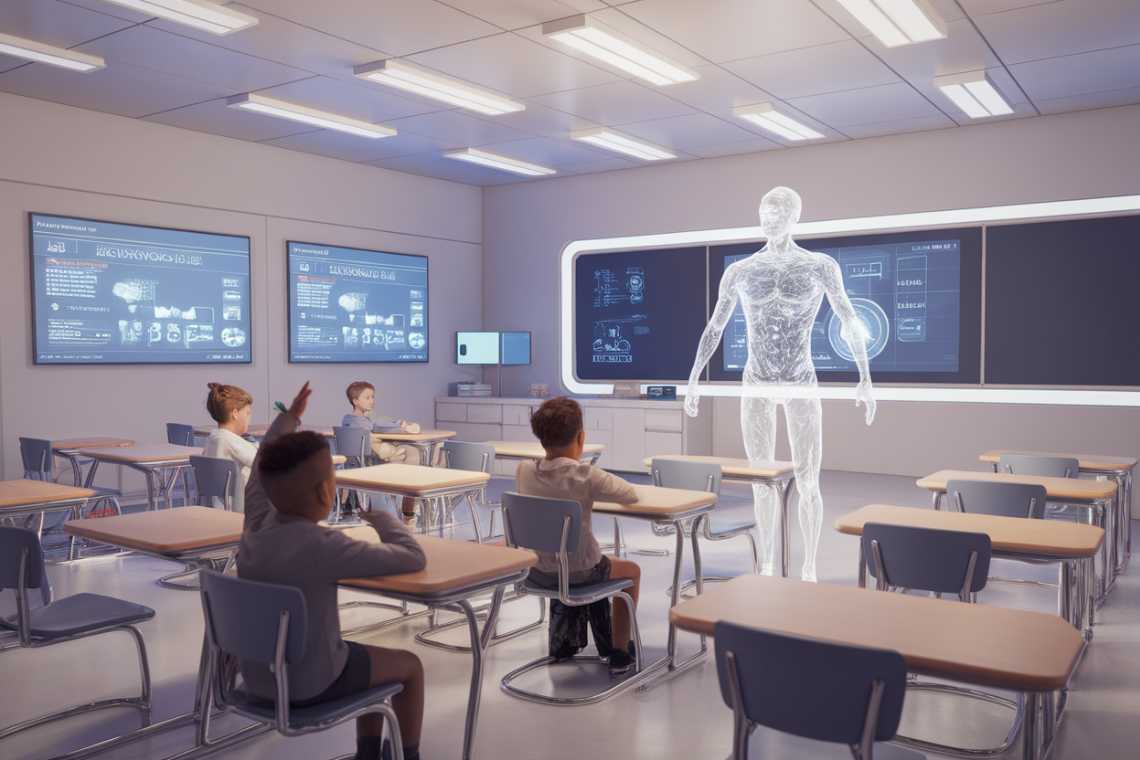
Modern education is increasingly relying on AI to bring about a more inclusive and engaging learning environment.
AI tools can help teachers save time by automating administrative tasks and providing insights into students’ progress.
As these technologies continue to develop, they promise to revolutionize how education systems operate and adapt to the needs of both educators and learners.
While the future of education with AI looks promising, it also presents several challenges, including ethical considerations and the need for training teachers to use these tools effectively.
Despite these hurdles, AI remains a significant player in transforming education to equip students with the skills needed in a rapidly changing world, potentially leading to a more enriched and diverse learning experience.
Key Takeaways
- AI enhances and personalizes learning experiences.
- AI supports teachers with data insights and task automation.
- Challenges exist, but AI has the potential to transform education.
Foundations of AI in Educational Settings
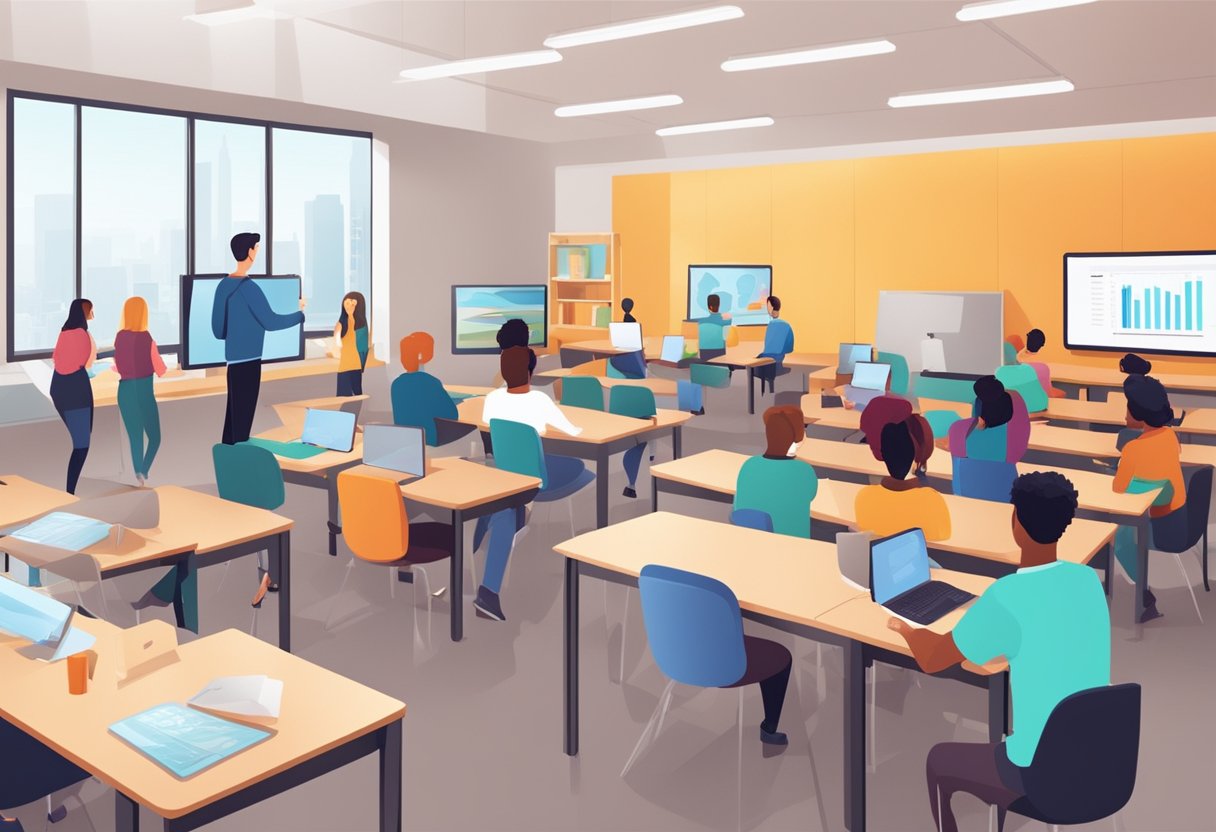
Artificial Intelligence (AI) plays a critical role in modern education. It is crucial to understand what AI is, its capabilities, and how it has evolved in educational settings.
Defining Artificial Intelligence and Its Scope
Artificial Intelligence refers to computer systems designed to perform tasks typically requiring human intelligence. AI encompasses a range of technologies such as machine learning and natural language processing.
Key components of AI include data analysis, pattern recognition, and decision-making. These tools enable systems to learn and adapt.
In education, AI tools are used to personalize learning, handle administrative tasks, and provide dynamic feedback.
They help teachers manage classrooms and tailor lessons to individual needs.
As AI becomes more prominent, fostering AI literacy among students and educators ensures they are prepared for future challenges and opportunities.
The Evolution of AI in Education
The integration of AI in education has seen significant growth over the years, impacting both teaching methodologies and learning environments.
Initially, AI was limited to simple automated systems but has now transformed into complex educational technologies.
AI algorithms enable personalized learning experiences by analyzing student data. This helps in tailoring educational content based on individual needs and abilities.
AI’s role in education extends to enhancing engagement and fostering creativity in the classroom.
As UNESCO discusses, guiding students and teachers to understand AI’s potential is essential for its successful integration.
Efforts to enhance AI education are evident in the development of curricula that teach students AI concepts.
Preparing students for future careers where AI plays a pivotal role is becoming increasingly important.
AI Implementation in Teaching and Learning
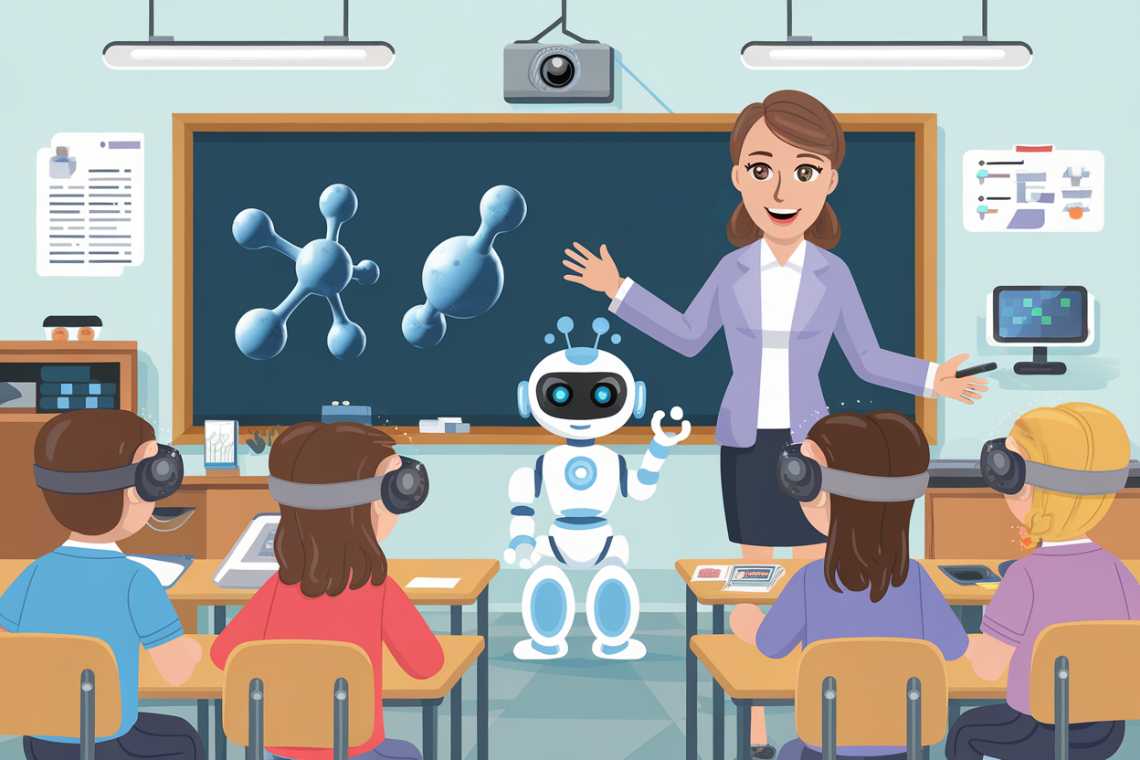
AI is transforming education by customizing learning experiences and supporting educators with advanced tools. This section dives into how AI personalizes learning, discusses the technologies available to teachers, and explores methods to improve student engagement using AI.
AI to Personalize Learning
AI offers the tools to tailor learning experiences to individual student needs.
Adaptive learning platforms utilize data to adjust content based on student performance, ensuring they receive the right support.
Individualized learning through AI helps address different learning speeds and styles.
By analyzing student interactions and progress, AI can recommend personalized resources or exercises. This ensures a dynamic and responsive education process that adapts to each student’s journey in real time.
Tools and Technologies for Educators
Educators benefit from AI through a range of powerful tools.
AI-driven analytics offer insights into class performance, helping teachers identify areas needing attention.
These tools support decisions like lesson planning and assignment creation.
AI-powered educational software provides resources that simplify administrative tasks.
Examples include grading software or automated attendance systems.
By reducing time spent on repetitive tasks, teachers can focus more on interactive teaching and guidance, enhancing the overall educational experience.
Enhancing Student Engagement with AI
AI enhances student engagement by creating interactive and immersive learning experiences.
Educational games powered by AI offer challenges tailored to student skills and interests, making learning fun and effective.
Interactive simulations and virtual environments allow students to explore subjects deeply, fostering curiosity and motivation.
By incorporating AI into learning tools, educators can create an engaging classroom atmosphere where students are active participants in their own education journey.
Implications of AI for Educators and Learners

AI is transforming education by providing innovative tools and approaches geared towards enhancing learning and teaching experiences. These changes directly affect teachers’ professional growth, inclusivity in education, and how learning environments are structured.
Professional Development for Teachers
AI aids teachers in professional development by offering resources tailored to their specific needs.
Personalized learning modules can be designed based on teachers’ feedback and performance. This helps address diverse teaching areas and methods.
AI tools also offer simulations and virtual classrooms where teachers can practice new strategies.
Online platforms provide real-time data, enabling teachers to adjust their methods effectively.
However, teachers need ongoing support and training to fully integrate AI into their practices, ensuring they keep up with technological advances.
AI as a Tool for Inclusivity and Equity
AI can play a significant role in creating an inclusive and equitable educational landscape.
It provides adaptive learning systems that accommodate diverse student needs, including those with disabilities. These systems analyze student interactions and adjust the material accordingly.
AI technologies, such as text-to-speech and speech recognition, offer students alternative ways to engage with content.
These tools help break down barriers for students who might otherwise struggle.
Ensuring ethical considerations are upheld during AI implementation is crucial to maintaining fairness and avoiding biases.
Shaping the Learning Environment
AI contributes to a dynamic learning environment by facilitating personalized learning experiences for students.
It allows for the creation of adaptive curriculum frameworks that cater to individual learning paths. Features like automatic grading systems and interactive feedback encourage student engagement.
AI systems also help teachers manage classroom activities more efficiently, providing immediate insights into student progress.
This allows teachers to focus more on direct interaction with students.
Challenges and Ethical Considerations in AI Education
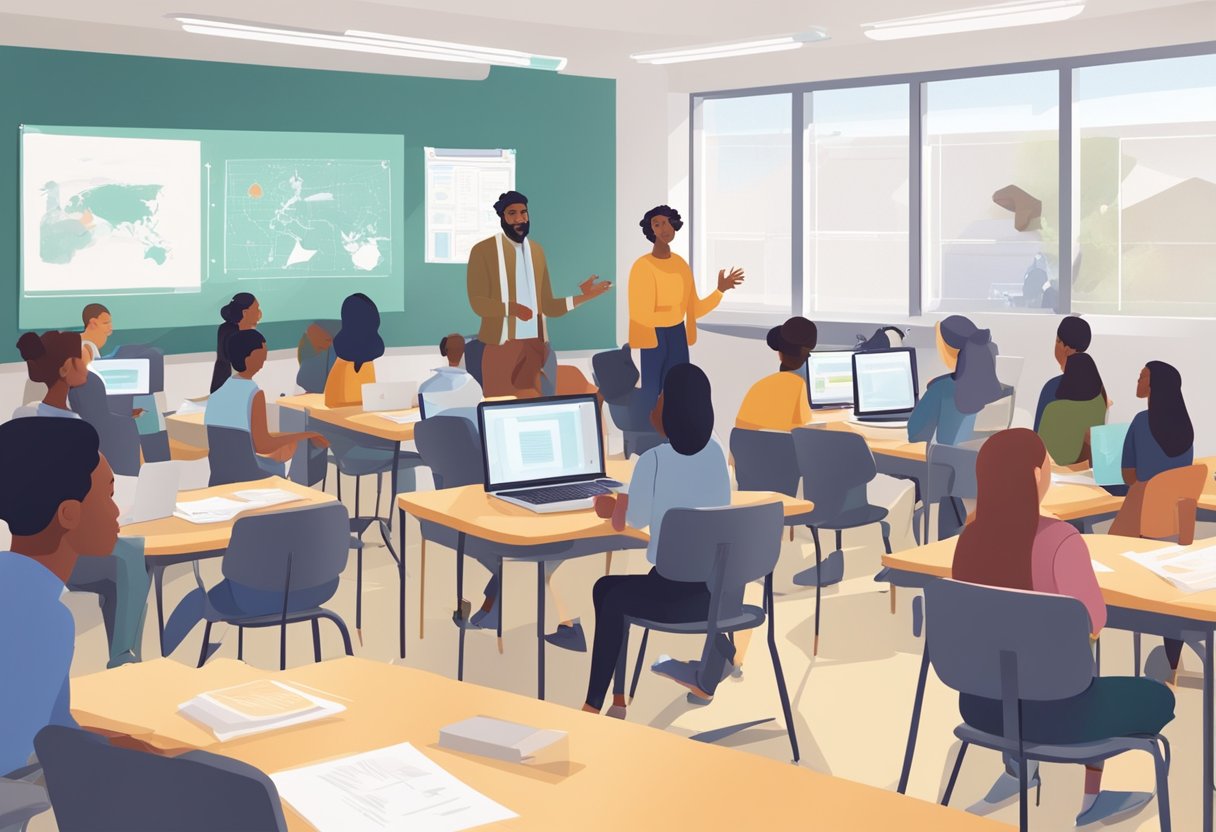
Integrating AI in education introduces both opportunities and challenges, particularly concerning ethical issues. It is crucial to responsibly address privacy and bias to ensure a fair and secure learning environment for all.
Privacy and Data Security Concerns
AI systems in education often handle large amounts of sensitive data about students.
This data can include personal information, academic records, and behavioral patterns. Protecting this information is critical to maintain academic integrity and privacy.
Educational institutions must adopt stringent AI guidelines to prevent data breaches.
Encryption, secure storage solutions, and regular audits are essential in safeguarding student information.
Transparent data policies help build trust between institutions and students.
Involving all stakeholders responsibly in the design of these policies ensures they reflect educational needs and respect student privacy.
Mitigating Bias and Ensuring Fairness
AI tools can inadvertently extend existing biases in educational content and analysis.
These biases may arise from biased data sets or flawed algorithms. Addressing this requires meticulous examination and revision of AI systems to uphold fairness and equality.
Implementing ethical considerations in the design and application of AI tools is necessary.
Diverse data sets and regularly updated algorithms are critical to reducing bias.
Educational institutions should also provide training for educators and developers about identifying and mitigating bias.
Ensuring inclusive practices will lead to fairer educational outcomes and maximize the benefits of AI in education.
Future Prospects for AI in Education
AI is changing how students learn by offering personalized experiences and creating new ways to engage with content. It also plays a role in making teaching more efficient and accessible. Innovative applications and training for future jobs are key areas to watch.
Innovations on the Horizon
AI has the potential to transform learning with several new technologies.
One promising innovation is generative AI.
This can create interactive and adaptive content, such as virtual tutors and personalized lesson plans. These tools help cater to individual learning styles.
AI innovation also focuses on enhancing accessibility.
For instance, AI can translate languages or transcribe audio, making resources available to diverse learners.
Additionally, AI can automate administrative tasks, freeing teachers to focus on personalized instruction.
Preparing Students for an AI-Driven World
Educators are considering how to prepare students for a future where AI is commonplace.
AI literacy is becoming a critical skill, along with reading and math.
Students need to understand AI’s role in society and its potential impact on jobs and industries.
Hands-on learning experiences with AI tools can help students grasp complex concepts.
By integrating AI into curriculums, schools aim to build skills that are relevant to future job markets.
This not only sparks student interest but ensures they are ready for an AI-driven world.
Frequently Asked Questions
AI integration in education raises important points and questions. These range from personalizing learning experiences to the ethical challenges involved.
How can AI be utilized to personalize learning experiences in educational settings?
AI can adapt learning materials to fit each student’s needs.
By assessing performance, AI recommends resources and activities suited to individual learning paces. This approach supports diverse learning styles and helps students grasp complex topics more effectively.
What are the proven benefits of incorporating AI in the education sector?
AI enhances efficiency. It automates administrative tasks like grading and scheduling. It also provides instant feedback, enabling students to improve in real-time. Teachers can use AI tools to develop tailored lesson plans. This frees more time for direct student interaction.
What strategies can educational institutions employ to effectively integrate AI into their curriculum?
Schools should start by identifying areas where AI can add value. They should also provide professional development for teachers. Collaboration between educators and tech experts can guide the integration process, making it seamless and effective.
What is the impact of AI on the roles of teachers and educators?
AI serves as an assistant, not a replacement. It allows teachers to focus on mentorship and creativity while it handles routine tasks. This shift allows educators to devote more time to personalizing instruction and providing emotional support to students.
In what ways can AI enhance the assessment and evaluation processes in education?
AI enables more dynamic assessment methods, such as interactive quizzes and simulations. It also analyzes student data to identify trends and areas for improvement. This technology aids educators in creating fairer and more accurate evaluation systems.
What are the ethical considerations and challenges of applying AI in educational environments?
Privacy is a major concern when dealing with student data. Schools must ensure AI tools comply with data protection laws.
There is also a challenge in addressing biases within AI algorithms. Institutions need to evaluate AI systems carefully to prevent inequality in education.











Comments 1