













• About
  • Privacy & Policy
Cleverall AI, Provides tutorials and resources for educators to harness AI in teaching and learning.
  • Home
  • Tutorials
    Man in a suit relaxes at his desk, smiling at a computer screen displaying a virtual assistant and email icons.

    How to Use AI for Email Management: Reclaim 5 Hours of Your Week with Smart Automation

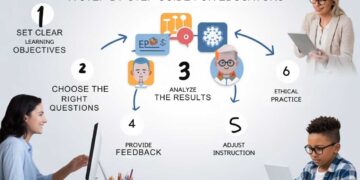
    Diagram illustrating a 6-step guide for educators using ChatGPT for student assessment: setting objectives, choosing questions, analyzing results, providing feedback, adjusting instruction, and ethical practice.

    ChatGPT for Student Assessment: A Step-by-Step Guide for Educators

    A woman in business attire observes a humanoid robot sorting through a stack of papers in an office setting.

    How Can AI Be Used for Grading Student Papers: A Comprehensive Guide to Automated Assessment

    A robotic arm places books on a conveyor belt in a modern, well-lit room.

    How to Automate Classroom Tasks with AI Tools: A Practical Guide for Teachers

    Person typing on a laptop at a black table with a cup of coffee, a notebook, and a pen, in front of bookshelves.

    Using Grammarly to Improve Student Writing: Enhancing Academic Performance

    Vintage Schaub-Lorenz radio with a red and silver design, featuring buttons and a transparent cover, set in a worn room with peeling paint.

    How to Use AI in Music Education: Exploring Suno, ChatGPT for Lyrics, and More

  • Integration
    A group of people sitting around a table, engaging in a meeting. Laptops and documents are on the table, and a screen displays information in the background.

    The Future of Curriculum Planning: AI-Assisted Content Creation – Transforming Education Through Smart Technology

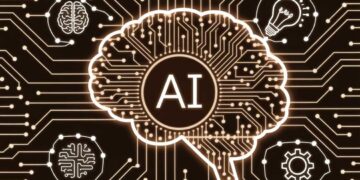
    An illustration of a brain with "AI" in the center, surrounded by icons of gears, a light bulb, and a microchip, with circuit lines in the background.

    How Can AI Be Used for Critical Thinking: Tools and Strategies for Enhanced Decision Making

    A person is giving a presentation to a group of students in a classroom. Two digital screens display graphics in the background. Students are seated at a table with laptops.

    How to Use AI Responsibly in the Classroom: Best Practices for Educators

    Students sit at desks using tablets in a classroom while a teacher stands near a whiteboard in the background.

    AI Tools for Education: Revolutionizing Teaching and Learning Practices

    A person presents a robotic design on a screen to an audience in a classroom setting. Attendees sit at desks with laptops and tablets.

    AI in Education 2025: The Role of AI Tools in Modern Schools

  • Basics
    A small, smiling robot with antennae sits on a wooden desk near books and a tablet, with green plants in the background.

    Best Tool ChatGPT, Claude, or Gemini for Education: A Comprehensive Comparison for Educators in 2025

    Person sitting at a desk using a computer, smiling, in a sunlit room with posters on the wall and a potted plant nearby.

    The Basics of Using ChatGPT: A Beginner’s Guide to AI Communication

    An abstract image depicting a microchip at the center; left side with glowing nodes and fibers, right side with circuit lines and blue dots.

    What Is One Challenge in Ensuring Fairness in Generative AI: Addressing Dataset Bias and Representation

    Students sitting at desks taking notes, while a teacher stands beside a large screen displaying a robot. Classroom setting with a focus on technology.

    AI in Education Basics: A Practical Guide for Modern Classrooms

    Students on computers learning possibly using AI

    AI in Education Pros and Cons: Evaluating the Impact of Technology on Learning

    A robot and a teacher interact in a classroom, with students observing. A futuristic digital display is projected onto a screen in the background.

    Top 5 Myths About AI in Education Debunked

    A man in a suit presents to a group of people seated with laptops in a classroom. A digital display with graphs and icons is projected on the wall. Sunlight streams through large windows.

    How Can AI-Powered Educational Tools Help Teachers Save Time on Administrative Tasks?

  • Educators
    A teacher and student smile while looking at a tablet displaying an AI rubric generator in a classroom setting, with other students engaged in learning activities in the background.

    Free AI Rubric Generator: Best Practices for Creating Custom Rubrics That Transform Learning

    In a sunlit classroom, a student studies a holographic display where mathematical equations intertwine with artificial intelligence concepts. This scene exemplifies personalized math learning with AI, as sunlight streams through the window, illuminating the innovative approach.

    AI Tools for Math Teachers

    A classroom scene with a diverse group of attentive students sitting at desks. A teacher stands in front of a blackboard, gesturing with arms open. A red flag hangs on the wall.

    AI-Powered Classroom Management Intervention: Harnessing Artificial Intelligence for Improving Student Behavior

    Students seated at desks using computers in a classroom, with three people standing in front of the room.

    AI Integration in Education: Transforming Learning Environments

  • Students
    In a futuristic setting, a person interacts with a holographic interface showcasing a humanoid robot, data charts, and a digital identification screen—illustrating the seamless convergence of AI and future careers.

    AI and Future Careers: Preparing for the Evolving Job Market of Tomorrow

    A humanoid robot with a digital face interacts with a seated person in a room with shelves and books.

    The New Tutor: Google AI Studio Revolutionizes Personalized Learning in 2025

    A boy sits at a desk, using a tablet. Various digital graphs and charts are projected around him. Books and stationery are on the desk, and a plant is in the background.

    AI for Students with ADHD: Transforming Learning Through Digital Support Tools

    Office space with a sign reading "What is NotebookLM" above plants and desks, with sticky notes on a distant whiteboard.

    Introducing NotebookLM: The Best AI Notebook Tool for Students in 2025

  • Resources
    A person in a denim jacket works at a desk, writing in a notebook and looking at a computer screen.

    Perplexity AI for Education

    A teacher stands at the front of a classroom, gesturing while students sit at desks with laptops, focused on a presentation displayed on a screen.

    Tools for Generative Artificial Intelligence in Education in 2025

    A digital artwork depicts a humanoid figure with a glowing brain and intricate circuitry, reflecting the essence of artificial intelligence. Connected nodes illustrate the seamless connectivity akin to cutting-edge Google AI Tools.

    Google AI Tools for Educators: Transforming Teaching with Generative AI

    A paper bag with a logo and "Chatgpt" sits on a wooden table in a classroom.

    Top Features of ChatGPT Every Educator Should Know: Enhancing Teaching and Learning

No Result
View All Result
  • Home
  • Tutorials
    Man in a suit relaxes at his desk, smiling at a computer screen displaying a virtual assistant and email icons.

    How to Use AI for Email Management: Reclaim 5 Hours of Your Week with Smart Automation

    Diagram illustrating a 6-step guide for educators using ChatGPT for student assessment: setting objectives, choosing questions, analyzing results, providing feedback, adjusting instruction, and ethical practice.

    ChatGPT for Student Assessment: A Step-by-Step Guide for Educators

    A woman in business attire observes a humanoid robot sorting through a stack of papers in an office setting.

    How Can AI Be Used for Grading Student Papers: A Comprehensive Guide to Automated Assessment

    A robotic arm places books on a conveyor belt in a modern, well-lit room.

    How to Automate Classroom Tasks with AI Tools: A Practical Guide for Teachers

    Person typing on a laptop at a black table with a cup of coffee, a notebook, and a pen, in front of bookshelves.

    Using Grammarly to Improve Student Writing: Enhancing Academic Performance

    Vintage Schaub-Lorenz radio with a red and silver design, featuring buttons and a transparent cover, set in a worn room with peeling paint.

    How to Use AI in Music Education: Exploring Suno, ChatGPT for Lyrics, and More

  • Integration
    A group of people sitting around a table, engaging in a meeting. Laptops and documents are on the table, and a screen displays information in the background.

    The Future of Curriculum Planning: AI-Assisted Content Creation – Transforming Education Through Smart Technology

    An illustration of a brain with "AI" in the center, surrounded by icons of gears, a light bulb, and a microchip, with circuit lines in the background.

    How Can AI Be Used for Critical Thinking: Tools and Strategies for Enhanced Decision Making

    A person is giving a presentation to a group of students in a classroom. Two digital screens display graphics in the background. Students are seated at a table with laptops.

    How to Use AI Responsibly in the Classroom: Best Practices for Educators

    Students sit at desks using tablets in a classroom while a teacher stands near a whiteboard in the background.

    AI Tools for Education: Revolutionizing Teaching and Learning Practices

    A person presents a robotic design on a screen to an audience in a classroom setting. Attendees sit at desks with laptops and tablets.

    AI in Education 2025: The Role of AI Tools in Modern Schools

  • Basics
    A small, smiling robot with antennae sits on a wooden desk near books and a tablet, with green plants in the background.

    Best Tool ChatGPT, Claude, or Gemini for Education: A Comprehensive Comparison for Educators in 2025

    Person sitting at a desk using a computer, smiling, in a sunlit room with posters on the wall and a potted plant nearby.

    The Basics of Using ChatGPT: A Beginner’s Guide to AI Communication

    An abstract image depicting a microchip at the center; left side with glowing nodes and fibers, right side with circuit lines and blue dots.

    What Is One Challenge in Ensuring Fairness in Generative AI: Addressing Dataset Bias and Representation

    Students sitting at desks taking notes, while a teacher stands beside a large screen displaying a robot. Classroom setting with a focus on technology.

    AI in Education Basics: A Practical Guide for Modern Classrooms

    Students on computers learning possibly using AI

    AI in Education Pros and Cons: Evaluating the Impact of Technology on Learning

    A robot and a teacher interact in a classroom, with students observing. A futuristic digital display is projected onto a screen in the background.

    Top 5 Myths About AI in Education Debunked

    A man in a suit presents to a group of people seated with laptops in a classroom. A digital display with graphs and icons is projected on the wall. Sunlight streams through large windows.

    How Can AI-Powered Educational Tools Help Teachers Save Time on Administrative Tasks?

  • Educators
    A teacher and student smile while looking at a tablet displaying an AI rubric generator in a classroom setting, with other students engaged in learning activities in the background.

    Free AI Rubric Generator: Best Practices for Creating Custom Rubrics That Transform Learning

    In a sunlit classroom, a student studies a holographic display where mathematical equations intertwine with artificial intelligence concepts. This scene exemplifies personalized math learning with AI, as sunlight streams through the window, illuminating the innovative approach.

    AI Tools for Math Teachers

    A classroom scene with a diverse group of attentive students sitting at desks. A teacher stands in front of a blackboard, gesturing with arms open. A red flag hangs on the wall.

    AI-Powered Classroom Management Intervention: Harnessing Artificial Intelligence for Improving Student Behavior

    Students seated at desks using computers in a classroom, with three people standing in front of the room.

    AI Integration in Education: Transforming Learning Environments

  • Students
    In a futuristic setting, a person interacts with a holographic interface showcasing a humanoid robot, data charts, and a digital identification screen—illustrating the seamless convergence of AI and future careers.

    AI and Future Careers: Preparing for the Evolving Job Market of Tomorrow

    A humanoid robot with a digital face interacts with a seated person in a room with shelves and books.

    The New Tutor: Google AI Studio Revolutionizes Personalized Learning in 2025

    A boy sits at a desk, using a tablet. Various digital graphs and charts are projected around him. Books and stationery are on the desk, and a plant is in the background.

    AI for Students with ADHD: Transforming Learning Through Digital Support Tools

    Office space with a sign reading "What is NotebookLM" above plants and desks, with sticky notes on a distant whiteboard.

    Introducing NotebookLM: The Best AI Notebook Tool for Students in 2025

  • Resources
    A person in a denim jacket works at a desk, writing in a notebook and looking at a computer screen.

    Perplexity AI for Education

    A teacher stands at the front of a classroom, gesturing while students sit at desks with laptops, focused on a presentation displayed on a screen.

    Tools for Generative Artificial Intelligence in Education in 2025

    A digital artwork depicts a humanoid figure with a glowing brain and intricate circuitry, reflecting the essence of artificial intelligence. Connected nodes illustrate the seamless connectivity akin to cutting-edge Google AI Tools.

    Google AI Tools for Educators: Transforming Teaching with Generative AI

    A paper bag with a logo and "Chatgpt" sits on a wooden table in a classroom.

    Top Features of ChatGPT Every Educator Should Know: Enhancing Teaching and Learning

No Result
View All Result
Cleverall AI
No Result
View All Result

How Can AI Be Used for Critical Thinking: Tools and Strategies for Enhanced Decision Making

February 15, 2025
Home Integration
Share on FacebookShare on Twitter

How Can AI Be Used for Critical Thinking: Tools and Strategies for Enhanced Decision Making

Artificial intelligence is changing how we think and learn. When used correctly, AI can strengthen critical thinking abilities rather than replace them. AI tools can enhance critical thinking by providing different viewpoints, challenging assumptions, and helping students develop deeper analytical skills through guided questioning and analysis.
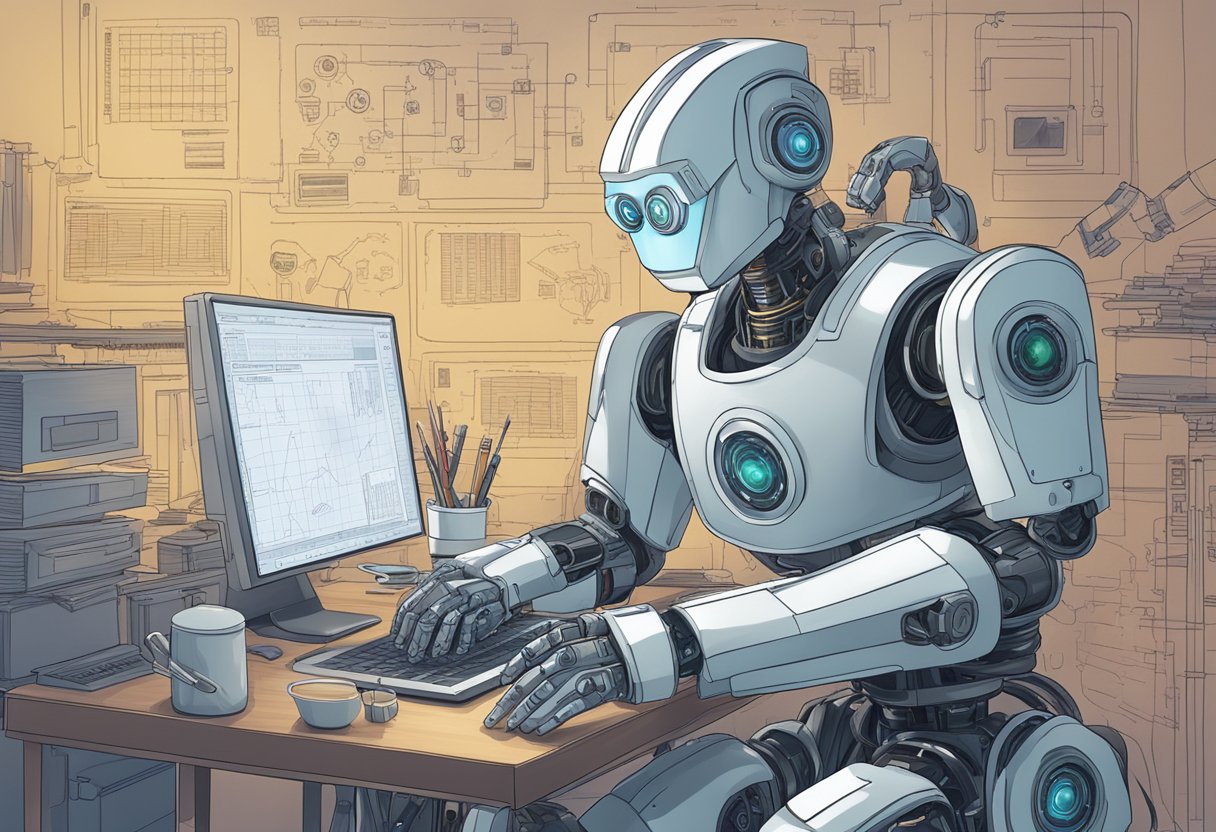
A robot analyzing complex data, surrounded by various information sources and processing algorithms

AI serves as a tool for developing stronger reasoning abilities when students learn to question its outputs and verify information. This process teaches vital skills like fact-checking, examining biases, and weighing different perspectives. Students who learn to work with AI while maintaining skepticism become better critical thinkers.

Evaluating AI-generated content helps students to think critically and solve problems. requires careful analysis and judgment. These skills prepare students for a future where working alongside AI becomes increasingly common. The key is learning to use AI as a complement to human thinking rather than a replacement for it.

Key Takeaways

  • AI tools enhance critical thinking by providing diverse perspectives and challenging assumptions
  • Students develop stronger analytical skills by learning to evaluate and verify AI-generated content
  • Working alongside AI while maintaining healthy skepticism creates more effective learning outcomes

The Intersection of AI and Critical Thinking

AI tools enhance human thinking abilities while requiring careful evaluation and skepticism to use effectively. Combining AI capabilities with human judgment creates powerful opportunities for deeper analysis and problem-solving.

Defining Critical Thinking Skills

Critical thinking involves analyzing information, questioning assumptions, and making reasoned judgments. These skills include:

  • Evaluating evidence and claims
  • Identifying patterns and connections
  • Drawing logical conclusions
  • Recognizing biases and limitations

AI systems can strengthen critical thinking by helping users refine their questions and explore different perspectives. This process requires users to be precise in their thinking and clear in their communication.

The key is maintaining a balance between AI assistance and independent thought. Users must actively engage with AI outputs rather than accepting them without question.

AI Technologies and Human Intelligence

AI serves as a tool to reduce cognitive load and free up mental resources for higher-level thinking. This allows people to focus on complex analysis and creative problem-solving.

Some key ways AI supports human intelligence:

  • Rapid data processing and pattern recognition
  • Generation of multiple perspectives
  • Testing of hypotheses and assumptions
  • Structured analysis of complex problems encourages students to think critically.

Healthy skepticism towards AI capabilities remains essential. Users need to verify AI-generated information and apply their own judgment to reach sound conclusions.

AI works best when used to enhance rather than replace human critical thinking skills. The technology serves as a powerful complement to natural human intelligence and intuition.

Roles of AI in Enhancing Learning and Education

Artificial intelligence transforms traditional education through adaptive learning platforms, personalized instruction, and immersive digital environments. These innovations help students develop deeper analytical abilities while giving teachers powerful tools to track and support learning progress.

AI in Education

AI-powered educational tools now include intelligent tutoring systems and automated grading assistants that provide instant feedback on student work. These systems analyze learning patterns to identify knowledge gaps.

Smart content creation tools help teachers develop customized learning materials and assessments tailored to different skill levels.

AI tutors and humanoid robots serve as supplementary instructors, answering student questions and explaining concepts in multiple ways. This gives students 24/7 access to learning support, enabling them to use AI tools like ChatGPT.

Customizing Learning Experiences

AI systems adapt to individual learning styles by analyzing how students interact with educational content. The technology adjusts difficulty levels and presentation methods in real-time.

Students receive personalized learning paths based on their:

  • Past performance
  • Learning pace
  • Areas of struggle
  • Preferred learning methods

This tailored approach helps students master concepts more effectively than one-size-fits-all instruction.

Virtual Learning Environments

Digital learning spaces use AI to create interactive 3D environments where students can practice skills and conduct virtual experiments safely.

These environments include:

  • Virtual laboratories for science experiments
  • Interactive simulations for complex concepts
  • Collaborative spaces for group projects

AI guides students through these virtual spaces, providing contextual help and tracking their progress as they complete hands-on learning activities.

AI in Decision-Making and Problem-Solving

A computer analyzing data and generating multiple solutions for a complex problem

AI systems enhance decision-making through rapid data processing and pattern recognition. These tools support critical thinking by analyzing complex information and adapting to new scenarios in real-time.

Data Analysis and Evaluation

AI-powered decision making requires students to think critically about the implications of their choices. integrates vast amounts of data to identify patterns and trends that humans might miss. Machine learning algorithms process information at incredible speeds, enabling faster and more accurate choices.

Organizations use AI, like ChatGPT, to analyze:

  • Market trends and consumer behavior
  • Risk assessment and financial modeling
  • Resource allocation and optimization
  • Performance metrics and efficiency data

AI systems take over routine decisions, letting human workers focus on strategic and creative tasks. This automation improves efficiency while reducing human error in data-heavy processes.

Critical Reflection and Adaptability

Modern AI systems learn from their outcomes and adjust their approaches based on new information. This adaptive capability ensures continuous improvement in decision-making processes.

AI assists managers by offering multiple perspectives on complex problems. The technology acts as a thought partner, helping leaders evaluate different scenarios and potential outcomes.

Key benefits of AI adaptability:

  • Real-time response to changing conditions
  • Continuous learning from new data
  • Dynamic adjustment is crucial for students to use AI tools effectively in their learning processes. of decision parameters
  • Improved accuracy over time

Ethical Considerations in AI

An AI system analyzing complex data sets, surrounded by various symbols and diagrams representing critical thinking processes

AI systems must balance powerful capabilities with responsible use, ethical decision-making, and respect for human values. These tools require careful attention to both their technical accuracy and moral implications.

Handling Biases and Accuracy

AI tools need human oversight in the age of AI. to ensure fair and accurate results. Bias can appear in many forms – from data selection to algorithm design, which students may need to understand to think critically.

Regular testing and validation helps catch errors before they impact decisions, allowing students to use AI tools effectively. Teams should check AI outputs against established benchmarks and expert knowledge.

Environmental impact matters too. AI systems often use significant computing power and energy, which poses challenges in the age of AI. Organizations must balance performance with sustainability.

Key ways to reduce bias:

  • Diverse training data
  • Regular accuracy testing
  • Multiple human reviewers
  • Clear documentation of limitations

Ethical Dilemmas and Human Consciousness

Human judgment remains essential when facing complex moral choices. AI lacks true consciousness and cannot fully grasp human values or cultural context.

Critical thinking must guide AI use in sensitive areas like healthcare, law enforcement, and financial services. Users need clear understanding of when to rely on AI versus human expertise.

Teams should create strong guidelines for ethical AI use. This includes rules for:

  • Privacy protection
  • Transparency in decision-making
  • Appeals processes
  • Human oversight of key decisions

Implications of AI on Work and Collaboration

A group of diverse professionals collaborating on a project, with AI technology assisting in critical thinking and problem-solving

AI tools create new possibilities for workplace efficiency and team collaboration when used strategically. These tools enhance professional capabilities while maintaining human critical thinking at the center of decision-making.

AI in Healthcare and Other Careers

AI integration in healthcare supports medical professionals in diagnosis and treatment planning while keeping doctors in control of final decisions. Medical teams use AI to analyze patient data and suggest treatment options.

Professional roles across industries are evolving to include AI collaboration skills. Workers who combine AI efficiency with human insight create more value than those working in isolation.

Teams must maintain their critical analysis skills. Studies show that excessive reliance on AI tools can weaken problem-solving abilities if used without proper evaluation.

Advancing Collaboration and Communication

AI platforms enhance team communication by automating routine tasks and organizing information. This allows teams to focus on complex problem-solving and creative work.

Key Benefits of AI Collaboration:

  • Faster information sharing
  • Automated meeting scheduling and notes
  • Real-time language translation
  • Smart document organization

Human-AI collaboration works best when teams maintain clear roles and responsibilities. AI handles data processing while humans guide strategy and make judgment calls.

Teams should establish guidelines for AI tool use in group projects. This ensures consistent practices and maintains quality standards across collaborative work.

Challenges and Future Prospects

A futuristic cityscape with AI-powered drones analyzing data and solving complex problems

The rise of AI tools brings both opportunities and obstacles for developing critical thinking skills. AI systems need careful evaluation while offering new ways to enhance cognitive abilities.

Addressing AI Limitations and Skepticism

Recent studies show that heavy AI use can lead to reduced critical thinking skills through cognitive offloading – people letting AI do their mental work.

AI systems can make mistakes or present incorrect information. Users must learn to question and verify AI outputs rather than accepting them blindly.

AI struggles with creative problem-solving and generating truly novel ideas outside its training data. This limitation reinforces the need for human critical analysis and creativity.

AI and the Future of Critical Thinking

AI can enhance critical thinking when users learn to craft precise questions and evaluate responses carefully. This builds stronger analytical skills.

Key skills for the future include:

  • Analyzing AI outputs for accuracy
  • Combining AI insights with human judgment
  • Developing creative solutions beyond AI capabilities
  • Maintaining healthy skepticism of automated responses

Students and professionals must balance AI assistance with independent thinking. The goal is using AI as a tool while strengthening, not replacing, higher-order thinking abilities.

Frequently Asked Questions

AI tools reshape critical thinking by providing new data analysis methods while challenging students and educators to verify information accuracy and evaluate machine-generated content. The growing presence of AI in education creates both opportunities and challenges for developing strong analytical skills, encouraging students to think critically.

What are the implications of AI on critical thinking skills in educational settings?

AI systems help students learn to evaluate information quality by requiring them to assess AI-generated content for accuracy and reliability.

Students develop stronger analytical abilities when they must fact-check and validate AI outputs against other credible sources.

Can the incorporation of AI tools enhance critical thinking abilities in learners?

AI technology serves as a powerful tool for developing analytical skills by presenting students with complex problems and multiple perspectives to consider.

Students strengthen their reasoning abilities by learning to craft effective AI prompts and critically evaluate the responses.

What negative effects could AI have on the development of critical thinking skills?

Excessive reliance on AI for answers can reduce independent problem-solving abilities if students accept AI outputs without questioning.

The ease of getting AI-generated responses may decrease motivation to engage in deep analytical thinking.

Is there a risk of decreased critical thinking ability due to over-reliance on AI technologies?

AI systems can generate hallucinations and inaccurate information, making it essential for users to maintain skepticism and verification practices.

Students who depend too heavily on AI may struggle to develop their own analytical frameworks and problem-solving strategies.

How can educators balance the use of AI with the need to foster critical thinking in students?

Teachers can design assignments that require students to analyze and critique AI-generated content rather than simply accepting it.

Class activities should focus on developing skills in verification, fact-checking, and identifying potential AI biases or errors.

In what ways does generative AI influence the exercise of critical thinking?

Generative AI creates opportunities for enhanced critical analysis by providing content that students must evaluate and verify.

Users must learn to identify AI limitations and potential errors while developing strategies to verify information accuracy, encouraging students to think critically.

The interaction between humans and AI tools creates new ways to practice analytical thinking and decision-making skills.

Tags: AI for StudentsAI in Education
AI Contributor

AI Contributor

Next Post
An abstract image depicting a microchip at the center; left side with glowing nodes and fibers, right side with circuit lines and blue dots.

What Is One Challenge in Ensuring Fairness in Generative AI: Addressing Dataset Bias and Representation

Leave a Reply Cancel reply

Your email address will not be published. Required fields are marked *

Recommended.

A digital artwork depicts a humanoid figure with a glowing brain and intricate circuitry, reflecting the essence of artificial intelligence. Connected nodes illustrate the seamless connectivity akin to cutting-edge Google AI Tools.

Google AI Tools for Educators: Transforming Teaching with Generative AI

February 11, 2025
Students seated at desks using computers in a classroom, with three people standing in front of the room.

AI Integration in Education: Transforming Learning Environments

February 13, 2025

Trending.

A small, smiling robot with antennae sits on a wooden desk near books and a tablet, with green plants in the background.

Best Tool ChatGPT, Claude, or Gemini for Education: A Comprehensive Comparison for Educators in 2025

March 5, 2025
A classroom scene with a diverse group of attentive students sitting at desks. A teacher stands in front of a blackboard, gesturing with arms open. A red flag hangs on the wall.

AI-Powered Classroom Management Intervention: Harnessing Artificial Intelligence for Improving Student Behavior

February 21, 2025
An abstract image depicting a microchip at the center; left side with glowing nodes and fibers, right side with circuit lines and blue dots.

What Is One Challenge in Ensuring Fairness in Generative AI: Addressing Dataset Bias and Representation

February 21, 2025
A boy sits at a desk, using a tablet. Various digital graphs and charts are projected around him. Books and stationery are on the desk, and a plant is in the background.

AI for Students with ADHD: Transforming Learning Through Digital Support Tools

February 14, 2025
Office space with a sign reading "What is NotebookLM" above plants and desks, with sticky notes on a distant whiteboard.

Introducing NotebookLM: The Best AI Notebook Tool for Students in 2025

February 13, 2025
Cleverall AI Logo

Cleverall AI empowers educators and students with practical AI tools, tutorials, and resources to make teaching and learning more personalized, effective, and innovative."

Follow Us

Categories

  • Basics
  • Educators
  • Integration
  • Resources
  • Students
  • Tutorials

Tags

AI Assistants AI for Students AI for Teachers AI in Education AI Music in Education ChatGPT Educational Technology Lesson Planning Myths About AI Teacher Resources Teaching with AI

Recent News

In a futuristic setting, a person interacts with a holographic interface showcasing a humanoid robot, data charts, and a digital identification screen—illustrating the seamless convergence of AI and future careers.

AI and Future Careers: Preparing for the Evolving Job Market of Tomorrow

March 28, 2025
Man in a suit relaxes at his desk, smiling at a computer screen displaying a virtual assistant and email icons.

How to Use AI for Email Management: Reclaim 5 Hours of Your Week with Smart Automation

March 17, 2025
  • About
  • Privacy & Policy

© 2025 Cleverall AI.

No Result
View All Result
  • Home
  • Tutorials
  • Integration
  • Basics
  • Resources
  • Educators
  • Students

© 2025 Cleverall AI.