











• About
  • Privacy & Policy
Cleverall AI, Provides tutorials and resources for educators to harness AI in teaching and learning.
  • Home
  • Tutorials
    Man in a suit relaxes at his desk, smiling at a computer screen displaying a virtual assistant and email icons.

    How to Use AI for Email Management: Reclaim 5 Hours of Your Week with Smart Automation

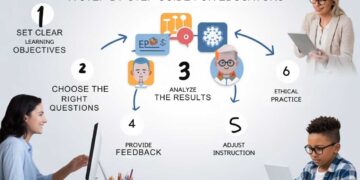
    Diagram illustrating a 6-step guide for educators using ChatGPT for student assessment: setting objectives, choosing questions, analyzing results, providing feedback, adjusting instruction, and ethical practice.

    ChatGPT for Student Assessment: A Step-by-Step Guide for Educators

    A woman in business attire observes a humanoid robot sorting through a stack of papers in an office setting.

    How Can AI Be Used for Grading Student Papers: A Comprehensive Guide to Automated Assessment

    A robotic arm places books on a conveyor belt in a modern, well-lit room.

    How to Automate Classroom Tasks with AI Tools: A Practical Guide for Teachers

    Person typing on a laptop at a black table with a cup of coffee, a notebook, and a pen, in front of bookshelves.

    Using Grammarly to Improve Student Writing: Enhancing Academic Performance

    Vintage Schaub-Lorenz radio with a red and silver design, featuring buttons and a transparent cover, set in a worn room with peeling paint.

    How to Use AI in Music Education: Exploring Suno, ChatGPT for Lyrics, and More

  • Integration
    A group of people sitting around a table, engaging in a meeting. Laptops and documents are on the table, and a screen displays information in the background.

    The Future of Curriculum Planning: AI-Assisted Content Creation – Transforming Education Through Smart Technology

    An illustration of a brain with "AI" in the center, surrounded by icons of gears, a light bulb, and a microchip, with circuit lines in the background.

    How Can AI Be Used for Critical Thinking: Tools and Strategies for Enhanced Decision Making

    A person is giving a presentation to a group of students in a classroom. Two digital screens display graphics in the background. Students are seated at a table with laptops.

    How to Use AI Responsibly in the Classroom: Best Practices for Educators

    Students sit at desks using tablets in a classroom while a teacher stands near a whiteboard in the background.

    AI Tools for Education: Revolutionizing Teaching and Learning Practices

    A person presents a robotic design on a screen to an audience in a classroom setting. Attendees sit at desks with laptops and tablets.

    AI in Education 2025: The Role of AI Tools in Modern Schools

  • Basics
    A small, smiling robot with antennae sits on a wooden desk near books and a tablet, with green plants in the background.

    Best Tool ChatGPT, Claude, or Gemini for Education: A Comprehensive Comparison for Educators in 2025

    Person sitting at a desk using a computer, smiling, in a sunlit room with posters on the wall and a potted plant nearby.

    The Basics of Using ChatGPT: A Beginner’s Guide to AI Communication

    An abstract image depicting a microchip at the center; left side with glowing nodes and fibers, right side with circuit lines and blue dots.

    What Is One Challenge in Ensuring Fairness in Generative AI: Addressing Dataset Bias and Representation

    Students sitting at desks taking notes, while a teacher stands beside a large screen displaying a robot. Classroom setting with a focus on technology.

    AI in Education Basics: A Practical Guide for Modern Classrooms

    Students on computers learning possibly using AI

    AI in Education Pros and Cons: Evaluating the Impact of Technology on Learning

    A robot and a teacher interact in a classroom, with students observing. A futuristic digital display is projected onto a screen in the background.

    Top 5 Myths About AI in Education Debunked

    A man in a suit presents to a group of people seated with laptops in a classroom. A digital display with graphs and icons is projected on the wall. Sunlight streams through large windows.

    How Can AI-Powered Educational Tools Help Teachers Save Time on Administrative Tasks?

  • Educators
    A teacher and student smile while looking at a tablet displaying an AI rubric generator in a classroom setting, with other students engaged in learning activities in the background.

    Free AI Rubric Generator: Best Practices for Creating Custom Rubrics That Transform Learning

    In a sunlit classroom, a student studies a holographic display where mathematical equations intertwine with artificial intelligence concepts. This scene exemplifies personalized math learning with AI, as sunlight streams through the window, illuminating the innovative approach.

    AI Tools for Math Teachers

    A classroom scene with a diverse group of attentive students sitting at desks. A teacher stands in front of a blackboard, gesturing with arms open. A red flag hangs on the wall.

    AI-Powered Classroom Management Intervention: Harnessing Artificial Intelligence for Improving Student Behavior

    Students seated at desks using computers in a classroom, with three people standing in front of the room.

    AI Integration in Education: Transforming Learning Environments

  • Students
    In a futuristic setting, a person interacts with a holographic interface showcasing a humanoid robot, data charts, and a digital identification screenโ€”illustrating the seamless convergence of AI and future careers.

    AI and Future Careers: Preparing for the Evolving Job Market of Tomorrow

    A humanoid robot with a digital face interacts with a seated person in a room with shelves and books.

    The New Tutor: Google AI Studio Revolutionizes Personalized Learning in 2025

    A boy sits at a desk, using a tablet. Various digital graphs and charts are projected around him. Books and stationery are on the desk, and a plant is in the background.

    AI for Students with ADHD: Transforming Learning Through Digital Support Tools

    Office space with a sign reading "What is NotebookLM" above plants and desks, with sticky notes on a distant whiteboard.

    Introducing NotebookLM: The Best AI Notebook Tool for Students in 2025

  • Resources
    A person in a denim jacket works at a desk, writing in a notebook and looking at a computer screen.

    Perplexity AI for Education

    A teacher stands at the front of a classroom, gesturing while students sit at desks with laptops, focused on a presentation displayed on a screen.

    Tools for Generative Artificial Intelligence in Education in 2025

    A digital artwork depicts a humanoid figure with a glowing brain and intricate circuitry, reflecting the essence of artificial intelligence. Connected nodes illustrate the seamless connectivity akin to cutting-edge Google AI Tools.

    Google AI Tools for Educators: Transforming Teaching with Generative AI

    A paper bag with a logo and "Chatgpt" sits on a wooden table in a classroom.

    Top Features of ChatGPT Every Educator Should Know: Enhancing Teaching and Learning

No Result
View All Result
  • Home
  • Tutorials
    Man in a suit relaxes at his desk, smiling at a computer screen displaying a virtual assistant and email icons.

    How to Use AI for Email Management: Reclaim 5 Hours of Your Week with Smart Automation

    Diagram illustrating a 6-step guide for educators using ChatGPT for student assessment: setting objectives, choosing questions, analyzing results, providing feedback, adjusting instruction, and ethical practice.

    ChatGPT for Student Assessment: A Step-by-Step Guide for Educators

    A woman in business attire observes a humanoid robot sorting through a stack of papers in an office setting.

    How Can AI Be Used for Grading Student Papers: A Comprehensive Guide to Automated Assessment

    A robotic arm places books on a conveyor belt in a modern, well-lit room.

    How to Automate Classroom Tasks with AI Tools: A Practical Guide for Teachers

    Person typing on a laptop at a black table with a cup of coffee, a notebook, and a pen, in front of bookshelves.

    Using Grammarly to Improve Student Writing: Enhancing Academic Performance

    Vintage Schaub-Lorenz radio with a red and silver design, featuring buttons and a transparent cover, set in a worn room with peeling paint.

    How to Use AI in Music Education: Exploring Suno, ChatGPT for Lyrics, and More

  • Integration
    A group of people sitting around a table, engaging in a meeting. Laptops and documents are on the table, and a screen displays information in the background.

    The Future of Curriculum Planning: AI-Assisted Content Creation – Transforming Education Through Smart Technology

    An illustration of a brain with "AI" in the center, surrounded by icons of gears, a light bulb, and a microchip, with circuit lines in the background.

    How Can AI Be Used for Critical Thinking: Tools and Strategies for Enhanced Decision Making

    A person is giving a presentation to a group of students in a classroom. Two digital screens display graphics in the background. Students are seated at a table with laptops.

    How to Use AI Responsibly in the Classroom: Best Practices for Educators

    Students sit at desks using tablets in a classroom while a teacher stands near a whiteboard in the background.

    AI Tools for Education: Revolutionizing Teaching and Learning Practices

    A person presents a robotic design on a screen to an audience in a classroom setting. Attendees sit at desks with laptops and tablets.

    AI in Education 2025: The Role of AI Tools in Modern Schools

  • Basics
    A small, smiling robot with antennae sits on a wooden desk near books and a tablet, with green plants in the background.

    Best Tool ChatGPT, Claude, or Gemini for Education: A Comprehensive Comparison for Educators in 2025

    Person sitting at a desk using a computer, smiling, in a sunlit room with posters on the wall and a potted plant nearby.

    The Basics of Using ChatGPT: A Beginner’s Guide to AI Communication

    An abstract image depicting a microchip at the center; left side with glowing nodes and fibers, right side with circuit lines and blue dots.

    What Is One Challenge in Ensuring Fairness in Generative AI: Addressing Dataset Bias and Representation

    Students sitting at desks taking notes, while a teacher stands beside a large screen displaying a robot. Classroom setting with a focus on technology.

    AI in Education Basics: A Practical Guide for Modern Classrooms

    Students on computers learning possibly using AI

    AI in Education Pros and Cons: Evaluating the Impact of Technology on Learning

    A robot and a teacher interact in a classroom, with students observing. A futuristic digital display is projected onto a screen in the background.

    Top 5 Myths About AI in Education Debunked

    A man in a suit presents to a group of people seated with laptops in a classroom. A digital display with graphs and icons is projected on the wall. Sunlight streams through large windows.

    How Can AI-Powered Educational Tools Help Teachers Save Time on Administrative Tasks?

  • Educators
    A teacher and student smile while looking at a tablet displaying an AI rubric generator in a classroom setting, with other students engaged in learning activities in the background.

    Free AI Rubric Generator: Best Practices for Creating Custom Rubrics That Transform Learning

    In a sunlit classroom, a student studies a holographic display where mathematical equations intertwine with artificial intelligence concepts. This scene exemplifies personalized math learning with AI, as sunlight streams through the window, illuminating the innovative approach.

    AI Tools for Math Teachers

    A classroom scene with a diverse group of attentive students sitting at desks. A teacher stands in front of a blackboard, gesturing with arms open. A red flag hangs on the wall.

    AI-Powered Classroom Management Intervention: Harnessing Artificial Intelligence for Improving Student Behavior

    Students seated at desks using computers in a classroom, with three people standing in front of the room.

    AI Integration in Education: Transforming Learning Environments

  • Students
    In a futuristic setting, a person interacts with a holographic interface showcasing a humanoid robot, data charts, and a digital identification screenโ€”illustrating the seamless convergence of AI and future careers.

    AI and Future Careers: Preparing for the Evolving Job Market of Tomorrow

    A humanoid robot with a digital face interacts with a seated person in a room with shelves and books.

    The New Tutor: Google AI Studio Revolutionizes Personalized Learning in 2025

    A boy sits at a desk, using a tablet. Various digital graphs and charts are projected around him. Books and stationery are on the desk, and a plant is in the background.

    AI for Students with ADHD: Transforming Learning Through Digital Support Tools

    Office space with a sign reading "What is NotebookLM" above plants and desks, with sticky notes on a distant whiteboard.

    Introducing NotebookLM: The Best AI Notebook Tool for Students in 2025

  • Resources
    A person in a denim jacket works at a desk, writing in a notebook and looking at a computer screen.

    Perplexity AI for Education

    A teacher stands at the front of a classroom, gesturing while students sit at desks with laptops, focused on a presentation displayed on a screen.

    Tools for Generative Artificial Intelligence in Education in 2025

    A digital artwork depicts a humanoid figure with a glowing brain and intricate circuitry, reflecting the essence of artificial intelligence. Connected nodes illustrate the seamless connectivity akin to cutting-edge Google AI Tools.

    Google AI Tools for Educators: Transforming Teaching with Generative AI

    A paper bag with a logo and "Chatgpt" sits on a wooden table in a classroom.

    Top Features of ChatGPT Every Educator Should Know: Enhancing Teaching and Learning

No Result
View All Result
Cleverall AI
No Result
View All Result

Artificial Intelligence in Education: How Teachers Can Use AI in the Classroom

February 12, 2025
Home Educators
Share on FacebookShare on Twitter

Artificial intelligence is emerging as a transformative force in today’s rapidly evolving educational landscape. By harnessing AI in education, teachers can use powerful tools to streamline lesson planning, enhance student learning, and maintain academic integrity. 
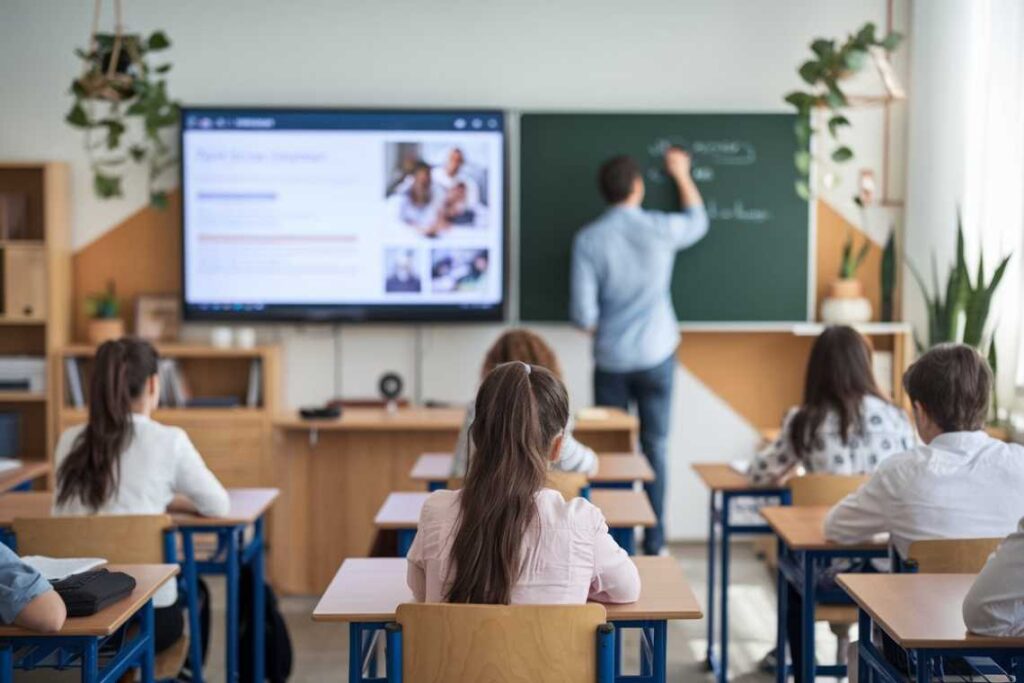
A teacher writes on a chalkboard while students sit at desks facing forward in a classroom setting. A large monitor displays a webpage.

This blog post explores how to use AI effectively to craft an inclusive, dynamic classroom environment, highlighting the benefits of AI in education and how these advancements impact both educator development and student learning outcomes.

Itโ€™s worth reading if youโ€™re curious about new ways to personalize learning, strengthen your professional development, and help students navigate the skills they need for future success.

Whether you want to help teachers save time, improve teaching and learning, or transform your career goals and teaching needs, understanding how to use AI can open doors to more effective learning experiences, and education is bright for all.

1. What Does AI in Education Look Like Today?

When we talk about AI in education, weโ€™re referring to a broad range of AI technologies that support teaching and learning. 

Whether AI is used for grading, content generation, or personalized learning pathways, these innovations have made it easier for every educator to manage classrooms and address diverse learning abilities.

Indeed, AI’s impact on education continues to grow as adaptive programs analyze AI output to refine how each student learns and interacts with digital content.

This use of AI in classrooms helps schools remain agile in a rapidly shifting educational landscape, addressing AI questions about academic integrity and equitable access.

But what exactly does AI in education include? In many cases, teachers have tried AI for tasks like automated grading, data analysis, and pattern recognition, enabling them to spend more time on direct instruction and use AI to help with administrative workloads. 

The AI facilitates a more individualized approach to teaching and learning, making it possible to offer individualized education to students with varied levels and learning abilities.

As AI evolves, new platforms are emerging that allow educators to create targeted classroom activities while maintaining an inclusive learning environment.

By using AI solutions, schools can respond more effectively to the immediate needs of students, ensuring that students learn in ways that align with their needs and learning styles.

2. Why Are the Benefits of AI in Education So Important?

A humanoid robot stands in front of a classroom, facing three seated children. Classroom features include desks, a whiteboard, and plants.

The benefits of AI in education are immense. First, these systems can analyze vast amounts of data, helping educator teams identify strengths and weaknesses in the curriculum. 

This analysis informs better lesson planning, so teachers can deliver more meaningful and effective learning experiences. Second, AI helps streamline workloads through functions like AI-automated grading, which frees teachers to focus on relationship-building and interactive lessons.

This focus on human interaction addresses concerns with AI in education that technology might dehumanize the classroom. Instead, it supports educators by letting them do what they do bestโ€”teach.

Another crucial advantage is enhanced flexibility. Schools and learning platforms that employ AI use can rapidly adapt to changing educational demands, such as shifting to online or blended learning models. 

By implementing AI thoughtfully, districts can maintain academic integrity and accountability while opening new doors for students to explore varied topics or skill sets.

With AI in education, educators see potential benefits that ensure teaching remains relevant, interactive, and increasingly personalized.

The possibilities are vast, and the use AI approach often paves the way toward more efficient, targeted instruction that fosters deeper engagement.

3. How Does Artificial Intelligence Improve Teaching and Learning?

Artificial intelligence is revolutionizing how teachers design activities, track progress, and measure outcomes. Through advanced data analytics, AI can help spot patterns in student performance, aiding in differentiated instruction. 

When integrated well, artificial intelligence expands resources, supplying real-time insights that help teachers identify individual challenges.

Additionally, advanced AI writing tools or image-generating AI tools can produce tailor-made content or visuals that spark creativity and deeper engagement in class.

Such innovations can transform the instruction dynamic, promoting critical thinking rather than rote memorization.

Moreover, artificial intelligence supports more inclusive strategies by helping teachers address the varied pacing of students with disabilities or those needing specialized support.

For instance, AI classroom solutions might provide audio or text-based alternatives that adapt to diverse learning abilities. This adaptability fosters an inclusive learning environment, aligning well with the goal of creating effective learning experiences for all.

By weaving AI content into everyday practice, schools also strengthen teaching and learning outcomes, ensuring that technology complements, rather than replaces, vital human interactions.

4. When Should Educators Use AI in the Classroom?
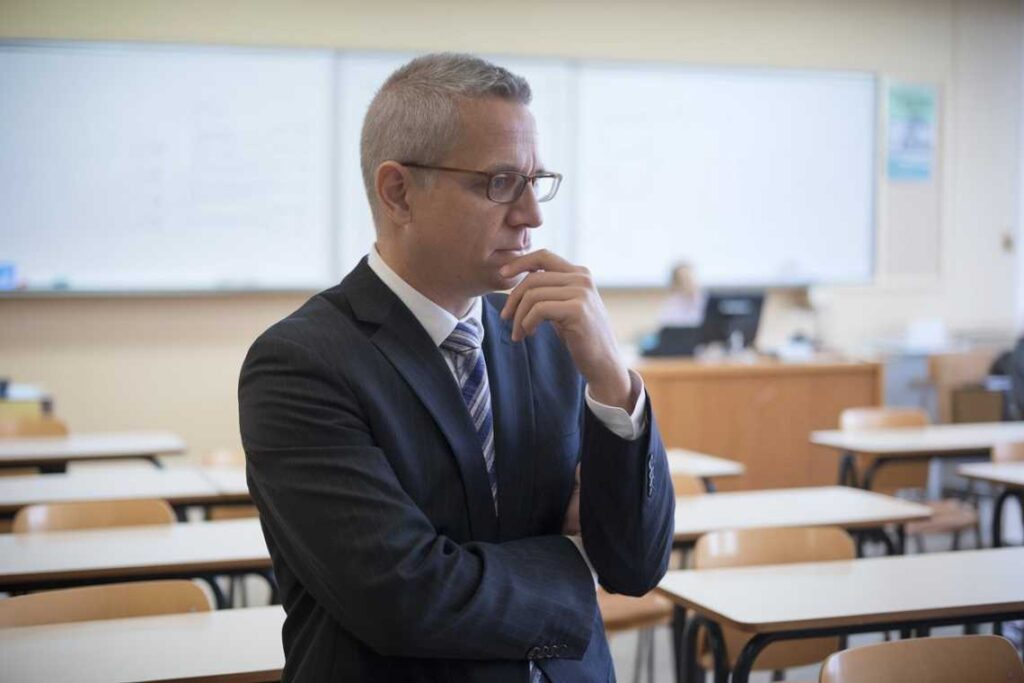
Man in a suit and glasses standing thoughtfully in an empty classroom with desks and a whiteboard.

Deciding when to use AI in the classroom often depends on specific objectives, career goals, and teaching needs. 

An educator might employ an AI tool to handle rote or repetitive tasks such as grading simple quizzes or generating lesson prompts, freeing up time for more hands-on instructional design.

When AI can reduce workload, teachers can devote extra energy to personalized instruction or small-group discussions.

Moreover, using AI in the classroom helps tailor resources to specific student interests, reinforcing active learning and engagement.

However, itโ€™s crucial to strike a balance. While AI tool solutions can speed up certain processes, they should never overshadow meaningful teacher-student interactions or hamper academic integrity.

By carefully selecting the right platform or software, schools can ensure that AI in the classroom aligns with broader educational goals.

Key considerations include data privacy, AI policy guidelines, and ensuring that any use of AI in classrooms upholds ethical standards. The ultimate aim is to create a supportive, efficient atmosphere that allows learners to grow holistically.

5. What Are the Best Examples of AI for Modern Classrooms?

Todayโ€™s examples of AI span from interactive chatbots and predictive analytics tools to sophisticated AI technologies that adapt the content in real time.

For instance, some AI tools like reading-level analyzers can automatically adjust text complexity based on each studentโ€™s proficiency.

Educators can customize quizzes, feedback, or remedial lessons by leveraging AI’s generative tutoring systems. Such digital solutions also keep track of individual progress, bridging gaps in learning for students who might need extra help.

Additionally, AI-generated content can simplify resource creation. Teachers who have tried AI platforms often discover time-saving features for generating class notes or visuals tailored to varied learning abilities.

Plus, AI to create interactive quizzes fosters hands-on learning and gamified experiences. These examples underscore how modern classrooms can evolve into vibrant, tech-savvy hubs of exploration, pushing the boundaries of what students can achieve.

By integrating AI for teaching tasks strategically, schools cultivate a learning environment that empowers creativity, fosters responsibility, and inspires lifelong learning.


6. Is Generative AI the Key to Personalized Learning?

Generative AIโ€”systems capable of producing new content such as text, images, or simulationsโ€”holds tremendous promise for personalized learning.

Unlike traditional software, which follows set rules, generative AI tools can adapt to each student’s unique profile. 

They can respond to immediate inputs, offering scaffolded support where needed and advanced challenges for quicker learners. This capability aligns with adaptive learning principles, ensuring that each learner progresses comfortably, enhancing teaching and learning overall.

By using generative AI, educators can create targeted content or personalized projects that reflect each studentโ€™s interests and skill level. 

Through specialized AI solutions, classes can incorporate immersive simulations or scenario-based tasks that make lessons more engaging. Notably, AI can also address learnersโ€™ different paces and styles simultaneously.

From reading comprehension exercises to foreign language practice, these platforms provide real-time, individualized feedback, supporting the next generation of personalized learning that resonates with how students need to learn in a digital age.

7. How Can We Prepare for the Future of AI in Education?

A person smiling next to a humanoid robot in a classroom with empty desks and chairs.

Embracing the future of AI in education requires proactive planning, developing policies around AI, and ensuring we maintain academic integrity.

Schools and districts should consider forming committees that regularly assess AI adoption strategies, gauge teacher readiness, and explore appropriate classroom applications.

Such efforts guide the AI integration process, from selecting tools to monitoring outcomes. Educators can avoid pitfalls like AI cheating or over-reliance on machine-generated materials by setting clear guidelines for AI to make better decisions.

Moreover, professional development is key to realizing the full potential of AI in education. Workshops or online training sessions can help teachers understand how AI helps with lesson planning, data-driven instruction, or even augment classroom activities.

When educators know where and how to best deploy these resources, students that AI resources serve benefit from more personalized, engaging lessons.

The future of AI points toward powerful collaboration between human insight and machine intelligence, ensuring that education is bright for both teachers and students.

8. How Does Understanding AI Affect the Future of AI?

Having a robust understanding of AI is vital as we advance deeper into the future of AI across all industries, not just education. 

As AI is here to stay, schools must equip teachers and learners with the skills to navigate increasingly tech-driven landscapes. Encouraging critical thinking about AI output fosters a generation that can discern, evaluate, and responsibly harness these tools. 

This is especially significant in an era where AI content can be created instantly, raising new questions about authenticity and reliability.

In essence, addressing AI knowledge gaps helps communities grapple with ethical concerns and fosters healthy skepticism. By understanding the scope and limitations of AI tool solutions, educators and students alike can avoid pitfalls like misinformation or over-dependence.

Additionally, teachers can use this expertise to refine classroom strategies, foresee AI’s challenges, and champion a balanced approach that merges technological efficiency with human ingenuity.

The more thoroughly we grasp how AI evolves, the more responsibly we can shape its role in society.

9. Which AI Tools Can Teachers Use for Professional Development?

When it comes to professional development, there are numerous AI tool options that teachers can use to upgrade their skills, streamline classroom management, and explore innovative lesson designs.

For instance, online platforms equipped with AI aid instructors in identifying their strong and weak areas and recommend targeted courses or training modules.

Educators can exchange ideas and refine their practice by employing tools like online forums and digital simulations. In turn, this fosters a culture of lifelong learning that improves overall teaching and learning outcomes.

Additionally, teachers can use advanced analytics to compare their AI output with best practices, ensuring continuous improvement.

These insights guide everything from lesson planning to adopting fresh methods that help students engage with the curriculum. Some AI writing tools even support reflection exercises, summarizing key learning points for quick review.

Ultimately, leveraging AI tools like content curators or training simulators can bolster an educatorโ€™s career, offering new ways to reach diverse learners.

Itโ€™s all about selecting the right resources to align with career goals and teaching needs while championing individualized education.

10. What Strategies Are Effective for Implementing AI in the Classroom?

Successful implementation of AI starts with clear objectives and thorough planning. For instance, schools might begin small by introducing a single AI classroom pilot program focused on a specific subject or skill set, letting them evaluate its impact before scaling up.

Administrators can address concerns about privacy and academic integrity early on by outlining an AI policy.

Next, they might use AI to create interactive modules to keep learners engaged. Incorporating AI to gamify classroom management ensures that daily tasks feel more like collaborative challenges than chores.

Itโ€™s also critical to establish support networks where educators can share experiences, especially when adopting new technologies.

Peer mentoring and open discussions on developing policies around AI encourage consistent, transparent growth.

As teachers become more comfortable, they might use AI tools to gather feedback from parents, track student progress, or measure engagement levels.

This cycle of feedback and refinement ensures that implementing AI aligns with each schoolโ€™s mission, creating a classroom environment that thrives on collaboration, exploration, and mutual respect.

Bullet Point Summary: Key Takeaways

Whiteboard displaying key takeaways: 1. Use clear writing. 2. Avoid jargon. 3. Ensure relevance and importance.
  • Artificial intelligence in the classroom: A transformative approach that can help teachers with automated tasks and data analysis.
  • Personalized learning: AI can also tailor materials for different levels and learning abilities, ensuring each learning experience meets diverse needs.
  • Generative AI and AI writing tools: Use AI to create interactive lessons, quizzes, and creative assignments that spur engagement and critical thinking.
  • Concerns with AI in education: Maintaining academic integrity, ensuring AI to cheat does not undermine genuine learning, and balancing technology use with human interaction.
  • Professional development: Teachers can use specialized AI tool platforms to refine skills, share best practices, and continuously improve.
  • Inclusive learning environment: Integrating AI fosters adaptability and individualized education for students with disabilities and varied backgrounds.
  • Future of AI in education: Emphasizes responsible AI integration with clearly defined objectives, AI policy, and ongoing professional development.
  • Use of generative AI: Provides creative avenues for AI content creation yet demands careful oversight to maintain academic integrity.
  • Field of education evolution: AI is here to stay, so educator communities should remain open, flexible, and ready to innovate responsibly.
  • AI adoption: Start small, gather feedback, and align AI technologies with career goals and teaching needs to ensure lasting success.

By taking these points to heart, every educator can confidently use AI to create stronger connections, more robust teaching and learning strategies, and effective learning experiences that propel students toward fulfilling futures. Through measured, thoughtful use in education, we can make AI a driving force for positive change in classrooms worldwide.

Tags: AI in EducationTeacher Resources
AI Contributor

AI Contributor

Next Post
Students wearing VR headsets sit in a classroom, watching a teacher who is presenting a 3D architectural model projected on a screen.

AI in Teaching: Revolutionizing Classrooms for Enhanced Learning

Comments 1

  1. Pingback: AI Integration In Education: Enhancing Learning & Teaching

Leave a Reply Cancel reply

Your email address will not be published. Required fields are marked *

Recommended.

A teacher stands at the front of a classroom, gesturing while students sit at desks with laptops, focused on a presentation displayed on a screen.

Tools for Generative Artificial Intelligence in Education in 2025

February 11, 2025
In a sunlit classroom, a student studies a holographic display where mathematical equations intertwine with artificial intelligence concepts. This scene exemplifies personalized math learning with AI, as sunlight streams through the window, illuminating the innovative approach.

AI Tools for Math Teachers

March 8, 2025

Trending.

A small, smiling robot with antennae sits on a wooden desk near books and a tablet, with green plants in the background.

Best Tool ChatGPT, Claude, or Gemini for Education: A Comprehensive Comparison for Educators in 2025

March 5, 2025
A classroom scene with a diverse group of attentive students sitting at desks. A teacher stands in front of a blackboard, gesturing with arms open. A red flag hangs on the wall.

AI-Powered Classroom Management Intervention: Harnessing Artificial Intelligence for Improving Student Behavior

February 21, 2025
An abstract image depicting a microchip at the center; left side with glowing nodes and fibers, right side with circuit lines and blue dots.

What Is One Challenge in Ensuring Fairness in Generative AI: Addressing Dataset Bias and Representation

February 21, 2025
A boy sits at a desk, using a tablet. Various digital graphs and charts are projected around him. Books and stationery are on the desk, and a plant is in the background.

AI for Students with ADHD: Transforming Learning Through Digital Support Tools

February 14, 2025
Office space with a sign reading "What is NotebookLM" above plants and desks, with sticky notes on a distant whiteboard.

Introducing NotebookLM: The Best AI Notebook Tool for Students in 2025

February 13, 2025
Cleverall AI Logo

Cleverall AI empowers educators and students with practical AI tools, tutorials, and resources to make teaching and learning more personalized, effective, and innovative."

Follow Us

Categories

  • Basics
  • Educators
  • Integration
  • Resources
  • Students
  • Tutorials

Tags

AI Assistants AI for Students AI for Teachers AI in Education AI Music in Education ChatGPT Educational Technology Lesson Planning Myths About AI Teacher Resources Teaching with AI

Recent News

In a futuristic setting, a person interacts with a holographic interface showcasing a humanoid robot, data charts, and a digital identification screenโ€”illustrating the seamless convergence of AI and future careers.

AI and Future Careers: Preparing for the Evolving Job Market of Tomorrow

March 28, 2025
Man in a suit relaxes at his desk, smiling at a computer screen displaying a virtual assistant and email icons.

How to Use AI for Email Management: Reclaim 5 Hours of Your Week with Smart Automation

March 17, 2025
  • About
  • Privacy & Policy

© 2025 Cleverall AI.

No Result
View All Result
  • Home
  • Tutorials
  • Integration
  • Basics
  • Resources
  • Educators
  • Students

© 2025 Cleverall AI.