



























AI and future careers are evolving rapidly as the landscape of work transforms with artificial intelligence reshaping industries across the global economy.
By 2025, we’re already seeing significant disruption. Research suggests more than 30% of workers could have at least half their tasks affected by generative AI technologies.
This shift isn’t limited to traditional automation targets—it now extends to roles requiring creativity and complex cognitive skills previously thought to be uniquely human domains.

Despite these changes, numerous career opportunities are emerging from the AI revolution.
The most promising AI-related jobs include machine learning engineers, natural language processing specialists, AI ethics consultants, and AI research scientists. These roles combine technical expertise with the human elements machines cannot replicate.
Meanwhile, positions requiring personal connection, creative thinking, and ethical oversight remain valuable and resistant to complete automation.
Preparing for this new reality means developing both technical and human-centered skills.
The digital economy rewards those who can work alongside AI systems while providing distinctly human value.
As businesses adapt to these technologies, workers who understand both the capabilities and limitations of AI will find themselves well-positioned for success in tomorrow’s job market.
Key Takeaways
- AI is disrupting traditional work patterns across industries, affecting even creative and complex cognitive tasks previously considered automation-resistant.
- New career opportunities are emerging that combine technical AI expertise with uniquely human capabilities like ethical oversight and creative problem-solving.
- Successful navigation of the future job market requires developing both technical literacy and distinctly human skills that complement AI systems.
The Intersection of Technology and Employment
Technology and employment are rapidly converging as AI transforms how we work.
This transformation creates new opportunities while disrupting traditional career paths, forcing workers and organizations to adapt to a changing landscape.
Evolving Job Market Dynamics
The job market is undergoing significant shifts due to technological advancement.
AI and automation are replacing routine tasks across industries, from manufacturing to customer service. According to recent trends, jobs requiring repetitive actions face the highest risk of displacement.
At the same time, technology creates new employment opportunities. The World Economic Forum estimates that while 85 million jobs may be displaced by 2025, 97 million new roles may emerge from the human-machine frontier.
Companies increasingly seek workers with digital literacy and technical skills. This shift has created a “skills gap” in many industries. Workers now need continuous learning to remain relevant.
Remote work technologies have also expanded job markets beyond geographical boundaries. This allows talent to connect with opportunities worldwide, changing how companies build their workforces.
Emerging Roles in AI and Data Science
New career paths are forming directly around AI technologies. Data scientists, machine learning engineers, and AI ethicists are in high demand across industries.
High-Growth AI Careers:
- Machine Learning Engineers
- AI Research Scientists
- Data Engineers
- Robotics Specialists
- AI Ethics Consultants
These roles typically require specialized knowledge but offer significant compensation. The average salary for AI specialists exceeds $140,000 in the United States.
Beyond technical positions, roles that bridge technology and business are flourishing. AI project managers and AI implementation specialists help organizations adopt new technologies effectively.
Cybersecurity has become crucial as AI systems handle sensitive data. Security analysts who understand AI vulnerabilities represent another growing career path.
Changes in Traditional Career Paths
Even conventional careers are evolving to incorporate technology.
Healthcare professionals now use AI diagnostic tools, while teachers employ educational technology platforms.
Legal professionals increasingly use AI for document review and research. This doesn’t eliminate jobs but changes how work gets done. The most successful professionals adapt by learning to work alongside AI tools.
Some industries face more disruption than others. Administrative and customer service roles have seen significant automation, while creative and strategic positions remain more insulated.
Workers in traditional fields can future-proof careers by developing complementary skills. Critical thinking, creativity, and emotional intelligence remain uniquely human strengths that AI cannot easily replicate.
The most resilient career paths combine technical knowledge with human-centered skills like communication and problem-solving. This hybrid approach offers the greatest security in a technology-driven job market.
Required Skills for Tomorrow’s Workforce

As AI continues to reshape the job market, workers need a combination of technical knowledge and uniquely human abilities. The workforce of tomorrow will require specific skills that complement AI rather than compete with it.
Technical Proficiencies in AI
Workers who understand AI fundamentals will have a significant advantage in the job market. Basic AI literacy is becoming essential across industries, not just in technology roles.
Understanding data analysis is particularly valuable, as AI systems rely on data to function. Workers don’t necessarily need to build AI systems, but they should understand how to interpret AI outputs and identify potential biases.
Programming and coding knowledge remain important, though the level of expertise needed varies by role. Many positions will require the ability to use AI tools rather than build them from scratch.
Digital skills beyond AI are also crucial. This includes proficiency with collaboration tools, cloud platforms, and cybersecurity basics.
Importance of Soft Skills
Human skills remain irreplaceable even as AI capabilities grow. Critical thinking tops the list of essential soft skills, allowing workers to evaluate AI outputs and make informed decisions.
Creative problem-solving sets humans apart from AI systems. The ability to connect seemingly unrelated ideas and develop innovative solutions will be highly valued.
Communication skills are becoming more important, not less. Workers must explain complex AI concepts to colleagues and customers in simple terms.
Emotional intelligence and empathy help build relationships that AI cannot replicate. These skills are especially important in roles requiring negotiation, leadership, and customer interaction.
Continuous Learning and Upskilling
The rapid pace of AI development means skills quickly become outdated. Successful workers adopt a mindset of lifelong learning.
Many organizations now offer internal upskilling programs to help employees adapt to new technologies. Workers should take advantage of these opportunities to stay relevant.
Self-directed learning through online courses, certifications, and workshops helps fill knowledge gaps. Platforms like Coursera, edX, and LinkedIn Learning offer specialized AI courses for various skill levels.
Cross-functional experience is increasingly valuable. Workers who understand multiple aspects of a business can better apply AI solutions to real problems.
Mentorship and peer learning accelerate skill development. Building networks with AI-savvy colleagues provides practical insights beyond formal education.
Impact of AI on Various Sectors
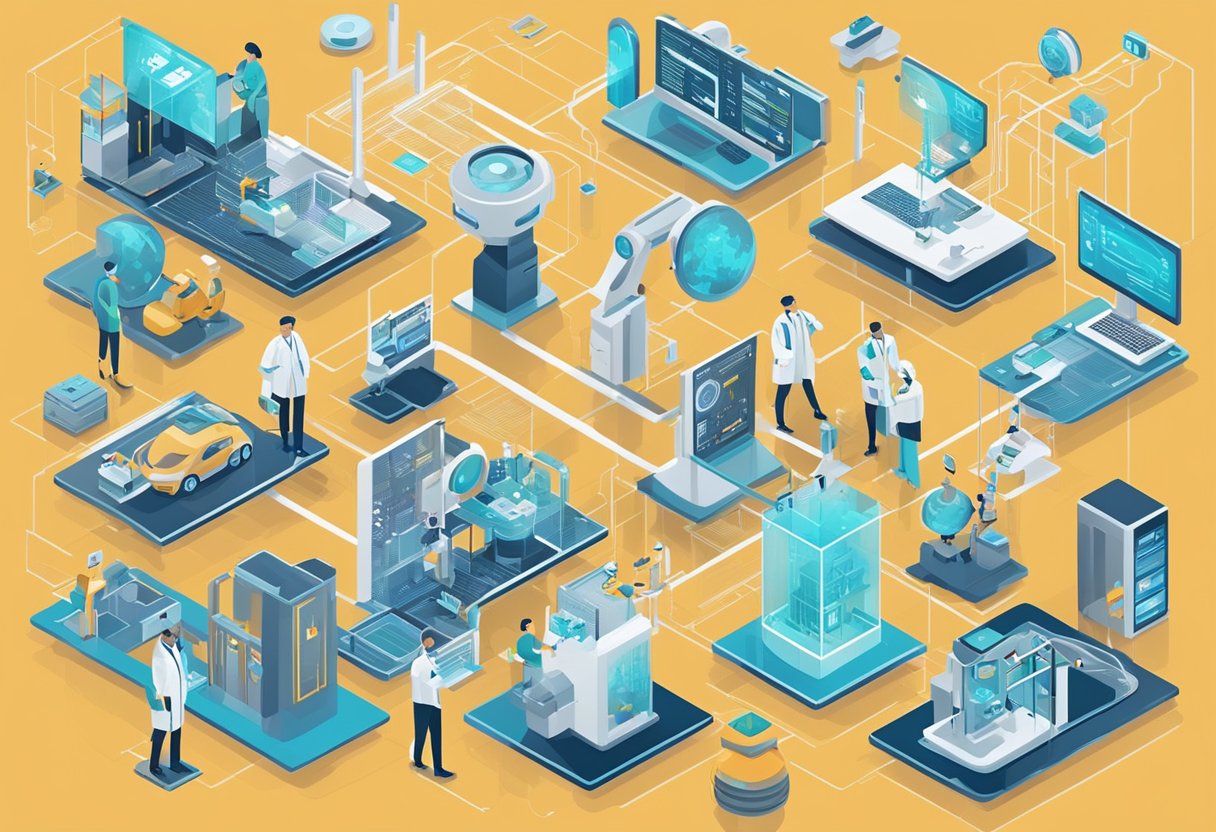
Artificial intelligence is reshaping multiple industries with varying effects on employment and productivity. While AI might replace some jobs, it’s also creating new opportunities and enhancing existing roles across key economic sectors.
Healthcare Advancements
AI is revolutionizing patient care through improved diagnostics and treatment plans. Machine learning algorithms can now analyze medical images with accuracy that sometimes exceeds human capabilities, helping detect diseases earlier and more reliably.
Virtual healthcare assistants are reducing administrative burdens for medical professionals, allowing them to focus more on patient interaction. These AI systems handle scheduling, basic patient questions, and even preliminary symptom analysis.
The pharmaceutical industry has embraced AI for drug discovery, significantly accelerating research processes. Algorithms can analyze molecular structures and predict potential therapeutic effects, cutting years off traditional development timelines.
Healthcare employment is actually expanding due to AI, with new roles emerging for specialists who can work alongside these systems. Experts predict 20-50 million new jobs by 2030, with healthcare being a major beneficiary.
Innovations in Agriculture
Smart farming technologies powered by AI are transforming agricultural productivity while addressing labor shortages. Autonomous tractors and harvesting robots can work around the clock, reducing dependence on seasonal workers.
AI-driven systems analyze soil conditions, weather patterns, and crop health to optimize growing conditions. These precision agriculture techniques reduce resource usage while increasing yields by up to 70% in some cases.
Farmers are becoming data analysts, using AI insights to make better decisions about planting, irrigation, and harvesting. This shift requires new skills but creates higher-value agricultural jobs.
Drone technology combined with computer vision helps monitor vast farmlands efficiently, identifying pest infestations or irrigation issues before they become serious problems. This technology enables fewer workers to manage larger areas effectively.
Transformations in Transport and Autonomous Vehicles
Self-driving technology is gradually changing transportation employment patterns. While some driving jobs may eventually decrease, new positions in fleet management and remote vehicle monitoring are emerging.
AI traffic management systems are reducing congestion in urban areas by 15-20% where implemented. These systems adjust signal timing and suggest route alternatives based on real-time conditions.
The logistics industry uses AI for route optimization, reducing fuel consumption and delivery times. This efficiency allows companies to handle more deliveries with the same workforce.
Safety improvements from AI driver-assistance systems are already saving lives, with a 40% reduction in accidents where advanced features are present. These technologies serve as a bridge to fully autonomous transport.
Vehicle maintenance is becoming predictive rather than reactive, with AI systems detecting potential failures before they occur. This shift creates new specialized technical roles.
AI in Finance and Investment
Algorithmic trading systems now handle over 70% of stock market transactions, changing the nature of financial employment. While some traditional trading jobs have disappeared, new positions managing these systems require advanced technical skills.
Customer service in banking is increasingly AI-augmented, with chatbots handling routine inquiries. This allows human staff to focus on complex problems and relationship building.
Risk assessment models using machine learning can process thousands of variables to make more accurate lending decisions. These systems help reduce defaults while potentially increasing access to financial services.
Fraud detection has improved dramatically through AI pattern recognition, saving billions annually across the industry. Specialists who can tune and supervise these systems are in high demand.
Personal financial planning is becoming more accessible through AI advisors that provide basic investment guidance at lower costs than human advisors. This creates new markets while changing how traditional financial planners work.
Ethical Considerations and Societal Implications

As AI becomes more integrated into workplaces and careers, several key ethical and societal concerns require careful attention. These include privacy concerns, broad societal impacts, and the need for thoughtful regulation.
AI Ethics and Privacy Concerns
AI systems collect and process vast amounts of personal data, raising significant privacy concerns. Companies using AI for hiring, performance monitoring, or decision-making must implement strong data protection measures.
Modern AI tools like natural language processing and generative AI can potentially analyze private communications or create deepfakes. These tools further complicate privacy protection efforts.
Bias in AI systems presents another critical ethical challenge. Machine learning algorithms often reflect the biases present in their training data, potentially leading to discrimination in hiring, promotion, or customer service.
Key privacy concerns include:
- Unauthorized data collection
- Lack of transparency about data usage
- Algorithmic bias affecting employment opportunities
- Limited user control over personal information
Organizations must prioritize ethical AI development by implementing fairness testing, diverse training data, and clear accountability frameworks.
Effects on Society and Environment
AI’s broad adoption across industries will reshape society significantly. While productivity increases, certain job categories face displacement risks as automation capabilities expand.
The environmental impact of AI deserves attention. Data centers running complex machine learning systems consume substantial energy, contributing to carbon emissions unless powered by renewable sources.
AI can widen existing social gaps. Communities with less access to technology education may fall further behind as AI-focused careers grow in importance and compensation.
On the positive side, AI offers potential solutions to major societal challenges:
- More efficient resource allocation
- Improved healthcare diagnostics
- Better environmental monitoring
- Enhanced educational tools
Balancing innovation with responsibility requires inclusive planning that considers diverse stakeholder perspectives rather than just technological possibilities.
Regulatory and Policy Developments
Governments worldwide are developing new policies to address AI’s rapid advancement. The European Union’s AI Act represents one of the most comprehensive regulatory frameworks, categorizing AI systems by risk level.
In the United States, sector-specific regulations are emerging for AI in healthcare, financial services, and transportation. These rules aim to protect consumers while allowing innovation.
Policy challenges include:
- Defining appropriate boundaries for AI decision-making
- Establishing liability frameworks for AI errors
- Creating standards for algorithmic transparency
- Developing international coordination mechanisms
Companies adopting AI technologies must stay informed about evolving regulations to ensure compliance. This may require dedicated ethics committees or compliance officers specializing in AI governance.
Worker protection policies are also evolving to address AI’s impact on jobs, including requirements for retraining programs and limits on certain surveillance technologies.
Frequently Asked Questions
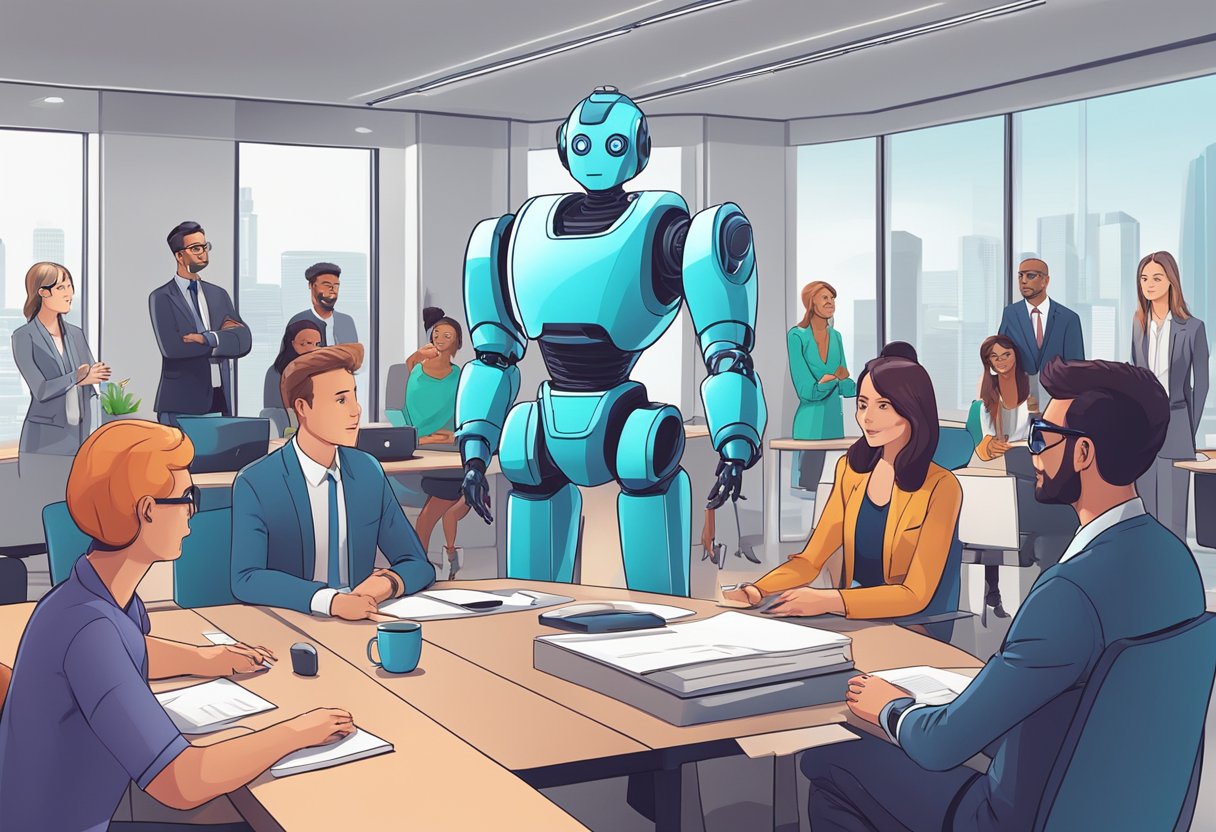
AI careers continue to evolve rapidly, creating both challenges and opportunities for job seekers. These common questions address how to enter the field, necessary skills, salary expectations, and the future impact of AI on employment.
What are the most promising career paths in artificial intelligence?
Machine Learning Engineer roles remain in high demand, focusing on designing and implementing AI algorithms. The position requires strong programming and mathematics skills.
Data Scientist positions bridge the gap between data analysis and AI applications. These professionals extract valuable insights from large datasets to inform AI solutions.
AI Research Scientists push the boundaries of what’s possible in artificial intelligence. This path typically requires advanced degrees and specialization in specific AI domains.
AI Ethics Specialists represent a newer career path addressing the ethical implications of AI systems. This role combines technical knowledge with ethics, policy, and social impact understanding.
How can one start a career in artificial intelligence without a traditional degree?
Self-directed learning through online courses and certifications provides a viable entry path. Platforms like Coursera, edX, and Udacity offer specialized AI courses developed by leading universities and companies.
Building a portfolio of personal projects demonstrates practical skills to potential employers. These projects should showcase problem-solving abilities and understanding of AI concepts.
Contributing to open-source AI projects helps build credibility and network with professionals. These contributions serve as public evidence of coding skills and collaborative abilities.
Bootcamps focused on AI and machine learning offer intensive, practical training. Many programs include career services and connections to industry partners.
What are the potential salary ranges for careers in artificial intelligence?
Entry-level AI positions typically offer salaries between $70,000 and $100,000 annually. These roles include junior data scientists and AI developers.
Mid-level professionals with 3-5 years of experience can expect $100,000 to $150,000 per year. Experience with successful AI implementations significantly increases value.
Senior AI engineers and researchers often earn $150,000 to $250,000+, especially in technology hubs. Specialized expertise in areas like deep learning or natural language processing commands premium compensation.
AI leadership roles such as Chief AI Officer can exceed $300,000 annually. These positions combine technical expertise with business strategy and team management.
Which skills are essential for securing a job in the AI industry?
Programming proficiency, particularly in Python, R, and Java, forms the foundation of AI careers. Familiarity with machine learning libraries and frameworks is equally important.
Mathematics and statistics knowledge, especially linear algebra, calculus, and probability, enables understanding of AI algorithms. These concepts underpin most machine learning approaches.
Domain expertise in the industry where AI is being applied provides crucial context. Understanding business problems helps create relevant AI solutions.
Communication skills are vital for explaining complex concepts to non-technical stakeholders. The ability to translate technical details into business value drives adoption.
What impact will AI have on the job market by 2050, and which roles might it replace?
Routine and repetitive tasks across industries face the highest automation risk. Data entry, basic customer service, and assembly line work are already seeing AI integration.
Creative and complex decision-making roles will likely transform rather than disappear. These positions will incorporate AI tools while maintaining human judgment and creativity.
New job categories will emerge to manage, maintain, and oversee AI systems. Roles like AI trainers, ethics officers, and human-AI interaction designers didn’t exist a decade ago.
The net effect on employment remains debated, with job displacement occurring alongside new opportunity creation. The transition will require workforce adaptation and reskilling initiatives.
How can one differentiate their skill set to be competitive in AI and robotics careers?
Developing expertise in emerging AI subfields like reinforcement learning or computer vision creates specialization. Deep knowledge in growing areas helps candidates stand out.
Combining AI technical skills with complementary expertise creates unique value propositions. Backgrounds in healthcare, finance, or manufacturing add contextual understanding.
Demonstrating strong ethical awareness and responsible AI practices appeals to forward-thinking employers. Companies increasingly recognize the importance of ethical AI deployment.
Gaining experience with real-world AI implementations, not just theoretical knowledge, proves practical abilities. Case studies of successful projects demonstrating business impact are particularly valuable.